eCommerce, Marketing, Meta Ads

Author: Erin Schnittker Siemek, Founder & CEO, Forge Digital Marketing

Last updated: October 2026

The short answer: Keep Meta ads in-house if your problem is execution and your spend can fund both a full-time buyer and a steady supply of new creative. Hire an agency if the problem is creative strategy, tracking or compliance, or if your spend can’t yet justify a dedicated team. Figure out which problem you have before you hire anyone.

Most founders start by comparing salaries to retainers. Start with the account. Tired creative and broken tracking produce the exact same falling ROAS, yet each needs a different person to fix it. If you hire the wrong kind of help… you’ll pay for three or four months before anyone notices the real issue.

Assess your current performance and internal capacity

Two questions decide this: what is actually broken, and does your team have the hours and skills to fix it? Answer the first one before you touch the second. A lot of “we need an agency” moments turn out to be a creative problem or a tracking problem wearing a disguise.

Read the funnel in order

Meta performance breaks at a specific stage. Find the first weak stage.

MetricWhat it tells youIf it’s weak, the fix isWho usually fixes it
Thumb stop rate (3-second video plays ÷ impressions)Whether the first frame stops the scrollNew hooks and opening shotsCreative strategist + editor
Hold rate (15-second plays ÷ 3-second plays)Whether the story keeps attentionScript and pacingCreative strategist
Link click-through rateWhether the ad makes a promise worth clickingAngle, offer, call to actionCreative + media buyer
Landing page conversion rateWhether the page delivers on the adPage, offer, reviews, priceEcommerce/CRO team
CPMWhat the auction is charging youAccount structure, audience, seasonalityMedia buyer
Meta purchases vs. Shopify ordersWhether your tracking is accuratePixel + Conversions API setup, deduplicationTechnical specialist or developer

A media buyer owns two of those six rows. So when a brand hires one person to “fix Meta” and the real break sits in creative or tracking, that hire can work hard for months and move nothing.

What a ROAS drop usually means

Check these causes in this order, because the first is the most common and the cheapest to confirm:

  1. Creative fatigue. Frequency on your top-spend ads climbs while thumb stop rate and CTR slide. You need new creative. New targeting won’t help.
  2. Tracking loss. Meta-reported purchases drift away from Shopify orders over the same date range. If that gap widened, Meta is under-counting, and your ads may be performing fine.
  3. A change on the site or the offer. CTR holds steady while conversion rate drops. Look at what changed after the click: price, stock, page speed, a new checkout app.
  4. Auction pressure. CPMs rise across every ad at once. Q4 and big sale weekends do this every year.

Compare like-for-like windows. If someone restructured the account halfway through a 90-day period, the average blends two strategies into one misleading number. Put the 30 days before the change next to the 30 days after.

Audit your team’s capacity

For a brand spending $20,000 to $100,000 a month, a typical week of Meta work looks like this:

  • Daily monitoring: 30 to 60 minutes a day on pacing, rejected ads and budget shifts
  • Test analysis and planning: 3 to 5 hours reading results and choosing what runs next
  • Creative production: 10 to 20 hours of briefing, creator sourcing, editing and design
  • Reporting: 2 to 3 hours tying Meta numbers back to Shopify

Most in-house plans budget for the first two lines and forget creative production entirely. The buyer gets hired, runs out of new ads to test by week six, and starts tweaking audiences instead.

Compare the true cost

Ad spend is excluded from every figure below.

OptionTypical costWhat you getMain risk
In-house media buyerAbout $97,000 average US salary (Glassdoor, via Superscale), roughly $10,000 to $11,000 a month once payroll taxes and benefits are addedFull-time attention and deep brand knowledgeOne person’s skill set; creative and tools cost extra; a resignation resets the account
Freelancer$15 to $40 an hour on Upwork, $25 median (Superscale)Flexible, low-cost executionLimited hours; rarely covers creative or tracking
Agency10 to 20% of monthly ad spend, or a flat retainer (Superscale, citing WebFX and Clutch)A team: buyer, creative strategist, designers, analystLess brand intimacy; quality varies widely

Run the crossover math on your own spend. At $50,000 a month, a 10 to 20% agency fee comes to $5,000 to $10,000, which is about what a single in-house buyer costs before you’ve paid for one piece of creative. Past roughly $100,000 a month, many brands go hybrid. An in-house growth lead owns strategy and the numbers, and an agency or creative studio handles production.

In-house usually wins when your spend covers a buyer plus a creative pipeline and your tracking is already clean.

An agency usually wins when the break is in creative or tracking, or when you sell supplements and every ad has to clear health-claim rules before it runs.

Define your requirements for an agency partner

Pick the agency built to fix the problem you just diagnosed. A shop with great media buyers and a thin creative bench won’t rescue an account whose hooks have gone stale. Write down your top two problems and score every agency against them. (Our guide to choosing a DTC ecommerce marketing agency covers the broader evaluation.)

If you sell supplements or wellness products

Supplement ads answer to two rulebooks at once. An agency fluent in only one will get your ads rejected or put your brand in front of a regulator.

  • Meta’s ad policies. Meta rejects ads that assert or imply the viewer has a health condition. “Struggling with brain fog?” gets flagged; “Built for focus on long workdays” runs. Before-and-after imagery and weight-loss claims carry extra restrictions on top of that.
  • Federal law. The FTC expects competent and reliable scientific evidence behind every health claim, and it treats a creator’s testimonial as your claim (paid partnerships also need clear disclosure). The FDA draws the other line: a disease claim like “treats anxiety” turns a supplement into an unapproved drug, while a substantiated structure/function claim like “supports healthy focus” is allowed.

In the pitch meeting, hand the agency a disease claim and ask them to rewrite it into a compliant structure/function claim on the spot. Ask who reviews creator scripts before launch. You want names and a process. If they need to get back to you, they haven’t done this much.

If you’re a Shopify brand scaling past $1M

Past $1M the question changes from “can Meta drive sales” to “are these sales real and profitable.” Require:

  • Server-side tracking. Meta’s Conversions API running alongside the pixel, with deduplication checked. Browser-only tracking under-counts purchases.
  • Blended reporting. Marketing efficiency ratio (total revenue ÷ total ad spend) and new-customer acquisition cost, alongside Meta-reported ROAS. Meta’s purchase count and Shopify’s will never match exactly, and your agency should be able to explain the gap.
  • Creative throughput. A repeatable monthly process for producing and testing new concepts. Spend only scales as fast as winning creative does.
  • Attention past the first order. Acquisition costs pay back when customers buy again, so an agency that ignores email and SMS retention is optimizing half the equation.

Questions to ask any agency

Ask thisA strong answerA red flag
How do you decide which creative gets more budget?Named metrics, thresholds and a testing cadence“The algorithm decides”
Who makes the creative?An in-house team or vetted creators, briefed per concept“You send us the assets”
What do you report, and how often?Thumb stop, hold rate, CTR, CPA and blended MER, reconciled to ShopifyA screenshot of Meta ROAS
Who owns the ad account and pixel?You do; the agency gets partner accessIt runs inside the agency’s own Business Manager
Can I see results for a brand like mine?A named case study with before-and-after numbers, or a client reference callPercentages with no client, timeframe or spend
What’s the contract term?A defined term with a clear exit clauseA long lock-in with no way out if results miss

Establish a budget and performance expectations

Settle the money and the metrics before anyone launches an ad. Agency relationships usually sour around month three, and the cause is almost always expectations nobody wrote down.

What is a good thumb stop rate on Facebook ads?

A good thumb stop rate on Facebook and Instagram video ads is 25 to 35%. Above 35% is strong. Below 25%, the opening needs work. Thumb stop rate (also called hook rate) is 3-second video plays divided by impressions, times 100, and it tells you whether the first moments of an ad stop someone mid-scroll.

Thumb stop rateWhat it meansWhat to do
Below 25%The opening isn’t stopping the scrollTest new first frames and opening lines
25 to 35%Solid, with room to improveKeep the concept and iterate on the hook
Above 35%The hook is workingCheck hold rate and CTR before you scale it

These ranges come from Motion’s creative metrics guide, which also puts average hold rate at 40 to 50% and average Meta CTR at 0.9 to 1.5%.

Across the accounts Forge manages, our best-performing video creative lands somewhere between 30% and 60%. Read the benchmark with two cautions.

  • Thumb stop alone can mislead you. One health brand’s video hit a 99% thumb stop rate and a 0.13% CTR. Nearly every viewer paused on it, and almost none clicked. Always read thumb stop beside hold rate and CTR.
  • It only measures video. Static images don’t register 3-second plays, so judge statics on CTR and cost per purchase. Autoplay behavior also differs by placement, which is why you should compare creative against creative in the same placements before you compare against any industry average.

How many ad creatives should you test per month on Meta?

The number comes out of your budget. Every test needs enough spend to produce a readable result, so use this:

Creatives you can test each month = monthly testing budget ÷ (2 to 3 × your target cost per purchase)

Take a brand spending $20,000 a month. It puts 20% ($4,000) toward testing and targets a $50 cost per purchase. That budget supports roughly 27 to 40 ads read on purchase data, which usually means 6 to 10 concepts with a handful of hook variations each. Thumb stop and CTR give you an early signal within a few days. Purchases make the final call.

Meta’s delivery system needs about 50 optimization events per ad set within a week to exit its learning phase. Spread a small budget across too many ad sets and every one of them stays stuck in learning, so consolidate tests into fewer ad sets with real budgets behind them.

How much should you pay an agency to manage Facebook ads?

Most agencies charge 10 to 20% of monthly ad spend, a flat monthly retainer, or a base fee plus a percentage, with ad spend billed separately. Clutch puts the average social media marketing retainer at about $5,108 a month (via Superscale).

Get these answers in writing before you sign:

  • Is creative production included, and is it capped?
  • Does the fee rise automatically as spend grows?
  • Are tracking fixes and landing page work billed separately?
  • Who owns the creative files if you part ways?

Why your Meta ads aren’t converting (supplement brands)

Clicks without purchases on a supplement account usually trace back to one of these:

  • The page is vaguer than the ad. Compliance edits watered down the landing page copy until it no longer matches the promise that earned the click. Make the ad and the page carry the same claim and the same offer.
  • Nothing on the page builds trust. People treat supplements as a trust purchase. Put third-party testing, ingredient sourcing, dose per serving and real reviews where shoppers see them without scrolling.
  • Subscription friction. Forcing a first-time buyer into a subscription kills conversion. Offer a one-time purchase with subscribe-and-save as the option.
  • Meta can’t see the sales. When the Conversions API is missing or misconfigured, purchases happen off Meta’s radar and the algorithm optimizes toward the wrong people.

What reporting should look like

Ask for a weekly scorecard that repeats the same metrics every time: spend, purchases, cost per purchase, thumb stop rate, hold rate, CTR and blended MER reconciled to Shopify. Then one or two lines on what was tested and which version won. A report that only lists results leaves you guessing whether anyone is steering the account.

How Forge runs Meta ads

Forge Digital Marketing is a boutique growth agency for DTC ecommerce brands, with deep roots in supplements and wellness. We run paid media on Meta and Google (TikTok too, when the product fits) and tie it to the email, SMS and Shopify work that decides whether a new customer ever turns a profit.

Our Meta method starts with the hook. We find the opening that stops the scroll, prove it converts to purchases, then move budget onto it and cut what doesn’t earn its spend. Static creative and design come included in management, built each month around the testing roadmap instead of a fixed number of deliverables.

At Batch Balance, one month of that approach produced these numbers:

MetricBeforeAfter one month
ROAS2.34x4.29x
Cost per purchase$36.81$22.80
Thumb stop rate14.3%31.2%
Purchases79170
Ad spend$2,908$3,876

Spend went up 33% while purchases went up 115%.

Weighing an in-house hire against an agency? We’ll audit your account and tell you which problem you actually have, including when the honest answer is to hire in-house. See how we run Facebook and Instagram ads, or book a discovery call with Carolynn Poulsen.

Frequently asked questions

Should I hire an agency or fix my Facebook ads in-house after a ROAS drop?

Start by comparing Meta purchases to Shopify orders, then check frequency, thumb stop rate and CTR on your top-spend ads. If creative fatigue or broken tracking caused the drop, an agency with creative and technical depth will usually fix it faster than a new hire.

Is it cheaper to hire an in-house media buyer or an agency?

Below roughly $50,000 a month in ad spend, an agency usually costs less once you count creative production. An in-house media buyer averages about $97,000 a year in salary, before benefits, tools or creative.

What is a good hook rate for Meta video ads?

Hook rate is another name for thumb stop rate. 25 to 35% is solid, above 35% is strong, and anything under 25% means the opening needs work.

How many creatives should I test on Meta each month?

Divide your monthly testing budget by two to three times your target cost per purchase. A $4,000 testing budget at a $50 target supports roughly 27 to 40 ads.

What should a supplement brand look for in a Meta ads agency?

Fluency in Meta’s health ad policies and in FTC and FDA claim rules, plus a named person who reviews creator scripts before launch. Ask to see case studies from ingestible or wellness brands.

How much do Facebook ad agencies charge?

Most charge 10 to 20% of monthly ad spend, a flat retainer, or a base fee plus a percentage. Ad spend is billed separately.

Sources

0

Marketing

Author: Erin Schnittker Siemek, Founder & CEO, Forge Digital Marketing

Last updated: October 2026

Choosing the right digital marketing agency for your direct-to-consumer (DTC) brand isn’t about finding the agency with the biggest client roster or the most impressive promises. It’s about finding a team that understands how ecommerce businesses grow—and knows how to connect customer acquisition, conversion, and retention into one coordinated strategy.

For Shopify and other ecommerce brands, that means thinking beyond individual marketing channels.

Your Meta Ads strategy influences which customers discover your products. Your website determines how effectively that traffic converts. Your Klaviyo email and SMS programs help customers return. And your SEO strategy creates additional opportunities for shoppers to find your business without relying exclusively on paid advertising.

The right DTC marketing agency understands how these activities influence one another and can demonstrate that expertise through real work.

At Forge Digital Marketing, we specialize in helping ecommerce brands connect paid media, organic search, conversion optimization, and customer retention.

This guide explains what to look for in an ecommerce marketing partner, which questions to ask before hiring an agency, and how to distinguish genuine expertise from attractive reporting dashboards.

1. Choose an Agency That Understands the Entire Ecommerce Customer Journey

A successful ecommerce growth strategy doesn’t end when someone clicks an advertisement or makes their first purchase.

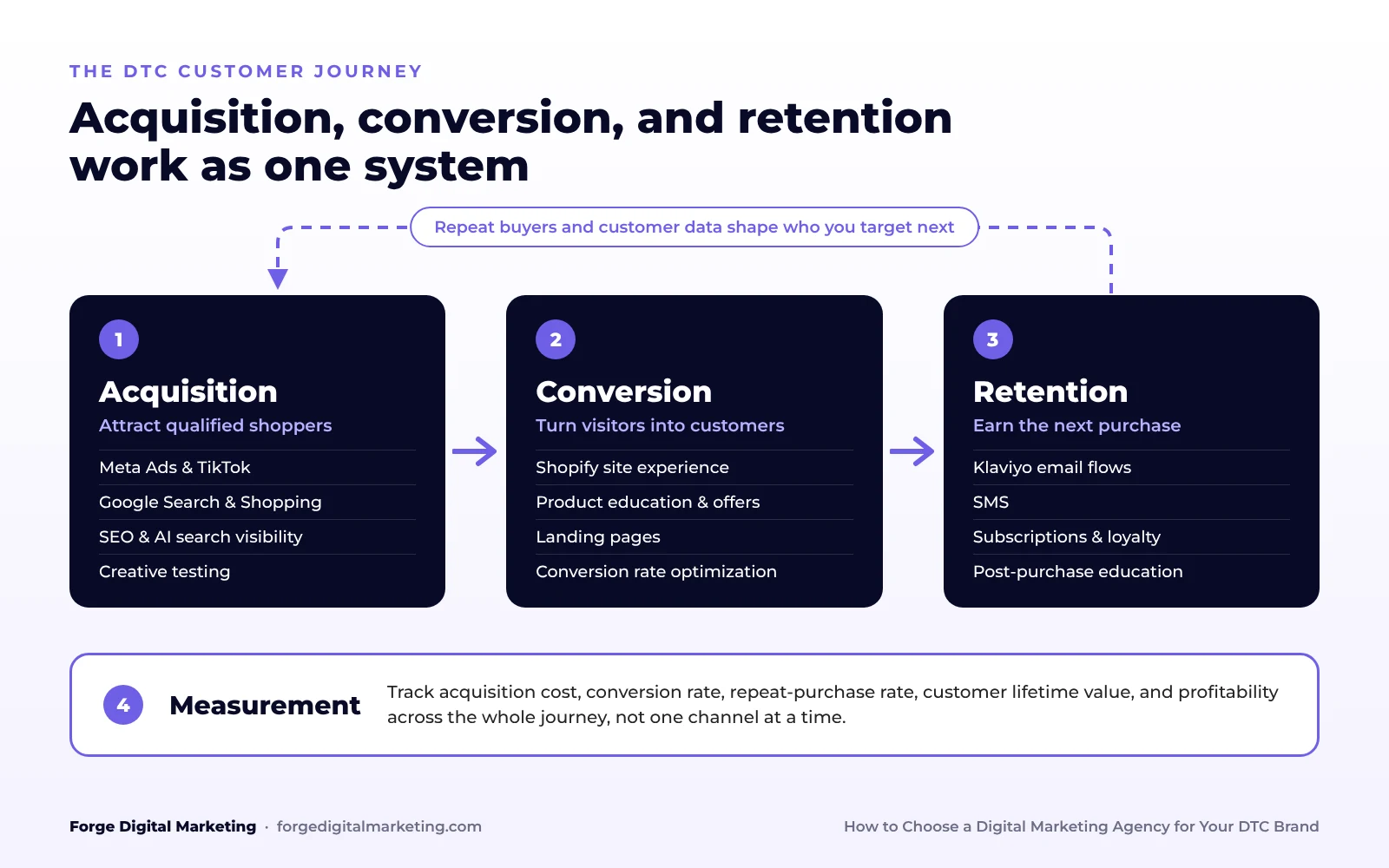
It should account for four interconnected stages.

Acquisition: Attracting qualified shoppers through Meta, Google, TikTok, SEO, and other appropriate channels.

Conversion: Turning visitors into customers through product education, compelling offers, thoughtful website design, and an optimized shopping experience.

Retention: Encouraging repeat purchases through email, SMS, subscriptions, loyalty programs, and relevant customer communications.

Measurement: Understanding how marketing investments influence acquisition costs, customer behavior, revenue, and profitability.

Forge diagram of the DTC customer journey: acquisition, conversion, and retention as one system, with measurement across all three and repeat-buyer data feeding back into acquisition
The four stages of the DTC customer journey, and how each one feeds the next.

An agency specializing in only one channel may be excellent at its particular discipline while overlooking problems elsewhere in the customer journey.

For example, a paid media agency may increase traffic without recognizing that a confusing product page is limiting conversions.

An email marketing agency may celebrate increased attributed revenue without investigating whether the business is successfully acquiring new customers.

And a Shopify development team may build a visually appealing website without understanding the landing page requirements of paid advertising campaigns.

Why does integrated ecommerce marketing matter?

Consider a DTC skincare brand introducing a new moisturizer.

Its Meta advertising introduces the product through distinct creative concepts targeting different customer motivations.

Its Shopify landing page explains the ingredients, benefits, and product experience.

Its Klaviyo welcome sequence educates interested shoppers who haven’t yet purchased.

Its post-purchase flows provide product usage guidance, encourage appropriate replenishment, and introduce complementary products.

Meanwhile, SEO content helps prospective buyers discover the brand while researching ingredients, skincare concerns, or product comparisons.

Each channel plays a different role, but all support the same customer journey.

That’s the difference between managing marketing channels and building an ecommerce growth strategy.

2. Look for Specialized Ecommerce Email and SMS Expertise

Who offers email marketing for ecommerce brands?

Many agencies offer email marketing. Fewer have the technical and strategic expertise to build sophisticated ecommerce lifecycle programs.

For DTC brands, email and SMS should do more than announce promotions or send newsletters. They should respond to customer behavior, support purchasing decisions, and create relevant opportunities for repeat revenue.

When evaluating an ecommerce email marketing agency, look for experience with:

  • Welcome sequences and subscriber acquisition.

  • Abandoned checkout and browse abandonment automations.

  • Post-purchase education and product recommendations.

  • Replenishment reminders aligned with product consumption.

  • Customer segmentation and behavioral personalization.

  • Win-back and reactivation programs.

  • Subscription retention and loyalty integrations.

  • Deliverability, list hygiene, and consent management.

  • Coordinated email and SMS campaigns.

Why Klaviyo expertise matters for Shopify brands

Klaviyo is particularly useful for ecommerce businesses because it can use customer, product, and purchase data to support more relevant marketing.

However, connecting Klaviyo to Shopify doesn’t automatically create an effective retention program.

The strategy depends on how that data is used.

For example, a supplement business selling a 30-day supply may benefit from replenishment messaging based on expected consumption and purchase behavior.

A fashion retailer may benefit more from product affinity, purchase history, new collection announcements, and personalized recommendations.

A skincare business may need education-driven post-purchase flows that explain product usage before introducing additional products.

Forge Digital Marketing is a Klaviyo Master Gold Partner providing email and SMS lifecycle strategy, campaign management, segmentation, automation, deliverability support, and ecommerce integrations.

Our experience also includes connecting Klaviyo with subscription tools, loyalty systems, customer reviews, and other components of the ecommerce technology stack.

What results should an ecommerce email agency deliver?

Be cautious of agencies that guarantee a specific percentage of revenue from email.

The appropriate contribution depends on the business model, acquisition mix, customer retention patterns, and attribution settings.

In Forge’s analysis of six DTC ecommerce businesses over a 90-day period ending October 6, 2026, the median brand attributed 27.28% of its store revenue to Klaviyo. Individual brands ranged from 15.16% to 47.77%.

The important distinction is that attributed revenue isn’t necessarily incremental revenue. A customer who purchases after receiving an email might have purchased anyway.

A sophisticated agency should evaluate lifecycle performance alongside repeat purchase rate, customer behavior, and overall business growth.

Real example: Irwin Naturals

In a published Forge case study, supplement brand Irwin Naturals recorded a 157% increase in Klaviyo-attributed email revenue over 30 days.

Forge’s work included rebuilding foundational automation flows, improving customer segmentation, and introducing a more structured campaign strategy.

During the reported period, Klaviyo attributed more than $66,000 in revenue, representing approximately 28% of total store revenue.

This is an example of platform-attributed performance, not a claim that all additional revenue was caused exclusively by email.

Read the Irwin Naturals Klaviyo Case Study

3. Find a Paid Media Agency That Understands Modern Advertising Algorithms

What should a DTC brand look for in a Meta advertising agency?

Running effective Meta Ads requires more than knowing how to configure campaigns, select audiences, and adjust budgets.

Modern advertising platforms increasingly rely on machine learning to identify which advertisements are most relevant to individual users.

That makes creative strategy, testing methodology, and customer understanding essential parts of effective advertising management.

One of the recurring problems Forge identifies during Meta Ads account audits is a lack of meaningful creative diversification.

We’ll encounter accounts with only four or five advertisements running, sometimes consisting of nearly identical product images or minor headline variations.

The problem isn’t simply that there aren’t enough advertisements.

It’s that the account lacks sufficiently different creative concepts to discover what resonates with different customer motivations.

How Meta’s Andromeda system changes creative strategy

Meta’s Andromeda ad retrieval system is part of the infrastructure used to identify potentially relevant advertisements before later ranking and delivery decisions.

As Meta’s AI-powered advertising technology has evolved, developing genuinely diverse advertising creative has become an important component of campaign strategy.

However, creative diversification doesn’t mean producing dozens of slightly modified advertisements.

An effective creative testing program explores distinct approaches, such as:

  • Different customer personas: Who needs the product, and what motivates them?

  • Different pain points: Which problems or frustrations influence purchase decisions?

  • Different hooks: Which opening messages capture attention?

  • Different formats: Founder-led videos, demonstrations, UGC, testimonials, lifestyle imagery, and static product advertisements.

  • Different value propositions: Quality, convenience, product formulation, price, functionality, or other meaningful benefits.

  • Different buying motivations: Practical solutions, emotional benefits, social proof, or educational content.

Consider a skincare brand.

One advertisement might feature the founder explaining why the product was developed.

Another might demonstrate its texture and application.

A third might use customer-generated footage to communicate how the product fits into a daily routine.

A fourth might focus on a particular ingredient and its role in the formula.

These advertisements aren’t just aesthetic variations. They explore distinct reasons someone might become interested in the product.

Creative volume matters, but creative differentiation is what makes that volume useful.

The appropriate number of creative concepts depends on the brand’s budget, audience, and testing capacity. More advertisements are not automatically better if the account lacks sufficient delivery or data to evaluate them.

Does a DTC brand need separate top-, middle-, and bottom-of-funnel advertising?

The customer journey should influence advertising messaging, but it doesn’t always require a separate campaign for every stage.

Forge regularly encounters accounts that fail to account for the differences between first-time prospects, interested shoppers, and customers already considering a purchase.

An effective full-funnel strategy should understand these distinctions.

Top of funnel: Awareness

Introduce the brand, explain the product, demonstrate its benefits, and connect with customer problems.

Middle of funnel: Consideration

Answer common questions, explain product differentiators, demonstrate use cases, and introduce credible customer experiences.

Bottom of funnel: Conversion

Address remaining purchasing objections through relevant offers, product details, shipping information, guarantees, and other decision-support content.

Retargeting: Re-engagement

Reconnect with people who have previously interacted with the brand or its products, where audience size, privacy requirements, and campaign economics support doing so.

These categories can overlap. Retargeting describes re-engaging an existing audience, while funnel stages describe where someone is in the purchasing journey.

Under Meta’s increasingly automated delivery systems, broader targeting and consolidated campaigns may be appropriate. Dedicated retargeting campaigns or segmented audience structures should be justified by the account’s needs rather than applied as universal rules.

The real objective is to create messaging that addresses different levels of customer awareness and purchase intent.

Who should produce the advertising creative?

This is an important question to ask when evaluating a Meta advertising agency.

Some agencies manage the advertising account but expect the client to supply every image, video, and creative variation.

Others provide creative production as part of their advertising services.

Forge combines both approaches.

Our creative team develops original advertising assets while also using client-supplied photography, video footage, customer content, and UGC.

This allows us to build testing programs using existing brand assets while producing additional concepts when a campaign needs creative diversity.

Depending on the engagement, our process may include creative strategy, original static advertisements, video concepts, creative briefs, and variations developed from available footage.

Rather than repeatedly adjusting targeting around the same advertisements, we can investigate whether new creative approaches are needed.

Real example: Batch Balanced

Forge’s work with food and beverage brand Batch Balanced illustrates the impact that stronger creative testing can have on advertising performance.

The account initially relied heavily on evergreen static imagery and early creator content.

Forge introduced a more structured creative testing approach, including stronger video hooks and relatable, Instagram-native UGC.

Here’s what that shift looked like in the ad account:

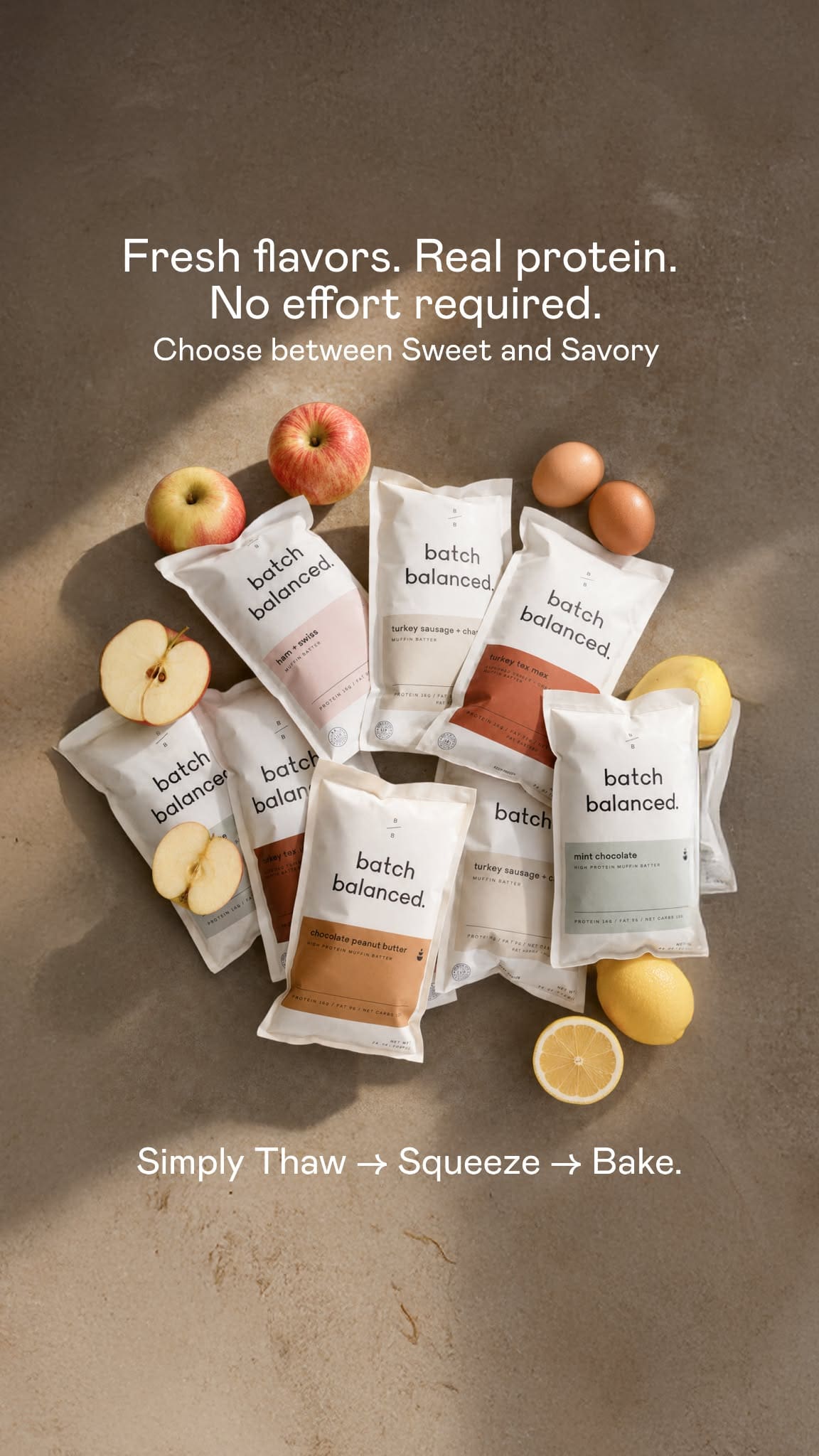
Batch Balanced evergreen static ad: Fresh flavors. Real protein. No effort required.
Before: polished evergreen static creative, the account’s main format before structured testing.
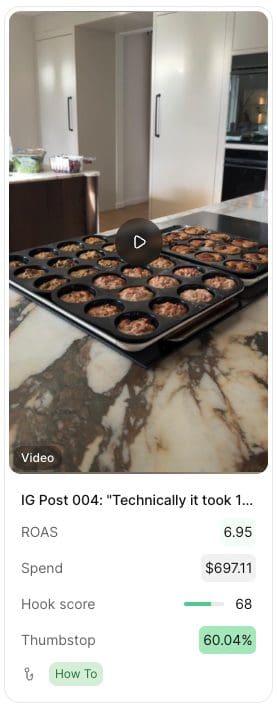
Batch Balanced IG Post 004 creative: a casual How To hook video
After: IG Post 004, a casual, organic-feeling “How To” hook video. On its own, it returned a 7.5x ROAS at a $14.37 CPA with a 57.7% thumb-stop rate (platform-reported).

Across the two periods reported in the case study:

Meta Ads metricBeforeAfter
Purchase ROAS2.34x4.29x
Cost per acquisition$36.81$22.80
Thumb-stop rate14.3%31.2%
Purchases79170

Advertising spend increased approximately 33%, while platform-reported purchase value increased approximately 145%.

The case study demonstrates what happened during a specific creative testing initiative. It doesn’t establish that other advertisers should expect the same outcome.

Read the Batch Balanced Meta Ads Case Study

Questions to ask a Meta advertising agency

Before hiring an agency, ask how it develops and tests creative, not merely how it structures campaigns.

Find out who produces the advertisements, how different customer personas are represented, how creative fatigue is evaluated, and what happens when existing concepts stop performing.

Also ask how the agency determines whether underperformance comes from the advertisement itself, the offer, audience delivery, tracking, or the landing page.

An experienced agency should be able to explain its methodology and show how creative insights influence future decisions.

4. Make Sure Paid Media and Shopify Conversion Optimization Work Together

Even the strongest advertising strategy can struggle when the website creates unnecessary friction.

Paid advertising and conversion rate optimization should be considered connected disciplines, particularly for brands investing heavily in customer acquisition.

What should you look for in a Shopify growth agency?

A strong Shopify marketing agency should understand how advertising traffic interacts with the website.

Important considerations include:

  • Mobile shopping experience and website speed.

  • Product page messaging and visual hierarchy.

  • Trust signals, reviews, and social proof.

  • Product information and educational content.

  • Subscription and bundle presentation.

  • Navigation and product discovery.

  • Checkout usability and purchasing friction.

  • Landing page relevance to advertising promises.

For example, a supplement company may have excellent advertising creative but a product page that fails to communicate serving information, ingredient benefits, or subscription terms clearly.

A fashion brand may lose potential customers because its sizing information is confusing.

A skincare company may need more persuasive product education before a first-time shopper feels comfortable purchasing.

These aren’t necessarily advertising problems. They’re conversion problems that affect advertising economics.

How does Forge approach Shopify conversion optimization?

Forge provides Shopify website design and development alongside ecommerce CRO and digital marketing services.

Our teams can examine the broader customer experience, from the advertising message to the landing page and eventual purchase.

When developing or improving a store, we consider how visual design, product education, usability, technical performance, and merchandising contribute to conversion.

The goal isn’t simply to make a website look better. It’s to identify and prioritize improvements that can help qualified visitors become customers.

Ask prospective agencies: If our advertising produces qualified traffic but sales are disappointing, how will you investigate whether the issue is advertising, the offer, or the website?

The answer should involve evidence, not assumptions.

5. Don’t Overlook SEO and Organic Product Discovery

Ecommerce businesses that depend exclusively on paid advertising can become vulnerable to changing media costs and platform performance.

Organic search can provide an additional channel for reaching prospective customers throughout the buying journey.

What should an ecommerce SEO agency actually do?

Effective ecommerce SEO involves substantially more than writing blog posts or placing keywords into product descriptions.

Look for capabilities including:

  • Technical SEO and crawlability.

  • Product and collection page optimization.

  • Site architecture and internal linking.

  • Commercial keyword research.

  • Structured data and product information.

  • Content supporting product education and buying decisions.

  • Search performance analysis.

  • SEO-informed website development.

The strongest strategy depends on how customers discover and evaluate products.

A fashion retailer may need stronger collection pages, sizing information, and product-category content.

A supplement business may benefit from educational resources explaining ingredients and product use cases, with appropriate claim review.

A skincare company may need content addressing particular skin concerns, ingredient questions, and product comparisons.

What about AI search and Google AI Overviews?

Search discovery is evolving as customers increasingly encounter AI-generated summaries and recommendations.

Ecommerce brands should focus on clear, accessible product information, original expertise, accurate structured data, and content that genuinely answers customer questions.

These practices can improve the quality and accessibility of a brand’s information, although they don’t guarantee inclusion in AI-generated answers.

An agency should distinguish established SEO principles from experimental tactics rather than promising visibility it cannot control.

Forge’s ecommerce SEO services connect technical optimization, content strategy, and commercial search intent to broader acquisition objectives.

6. Choose an Agency With Experience in Your Ecommerce Category

Ecommerce expertise is important, but experience with your particular type of product can provide additional value.

Different product categories have different customer behaviors, purchasing considerations, and marketing constraints.

Supplements and wellness: Customer education, advertising restrictions, compliant messaging, subscriptions, and replenishment.

Beauty and skincare: Ingredient education, product demonstrations, customer trust, creative storytelling, and repeat purchases.

Fashion and apparel: Merchandising, sizing, seasonal collections, visual identity, customer acquisition, and returns.

Food and beverage: Bundles, subscriptions, product sampling, reorder frequency, and repeat-purchase economics.

Lifestyle and CPG: Product differentiation, brand storytelling, customer education, and channel-specific purchasing behavior.

Forge works with ecommerce brands across these categories, including businesses operating in advertising-restricted markets.

Our experience with supplements, health and wellness, and personal care is especially relevant for brands that must balance persuasive messaging with platform policies and appropriate compliance considerations.

Should an agency have worked with your exact product?

Not necessarily.

A strong agency may transfer relevant experience across businesses with similar purchasing patterns, customer behavior, or operational challenges.

For example, a skincare brand and a supplement brand may both benefit from education-led acquisition and replenishment-based retention.

What’s important is whether the agency understands the commercial challenges affecting your particular business.

Ask for examples of how the agency has solved problems similar to yours—not merely whether it has worked in your industry.

7. Evaluate Strategic Oversight, Client Communication, and Accountability

One of the biggest challenges for growing ecommerce brands is coordinating work across multiple marketing disciplines.

Your paid media strategist may focus on customer acquisition. Your email strategist may prioritize retention. Your SEO team may focus on organic visibility.

These activities should support the same business objectives, even when different specialists own their execution.

Who should actually manage your account?

Before hiring an agency, ask who will be responsible for your relationship and who will be making strategic decisions.

At Forge Digital Marketing, client engagements are supported by specialized marketing teams and dedicated client success management.

Channel strategists provide specialized performance analysis and strategic recommendations.

Client success managers coordinate communication, deliverables, project timelines, and account priorities.

This creates clearer responsibility for both marketing execution and the overall client relationship.

For brands using multiple Forge services, it also provides a structure for coordinating work across departments.

What should an ecommerce agency report?

A strong ecommerce agency should help you understand the business implications of marketing performance.

Depending on your services and business model, important metrics may include:

MetricWhat it helps evaluate
Customer acquisition costHow much it costs to acquire customers
Return on ad spendRevenue attributed to advertising relative to media spend
Conversion rateHow effectively website traffic becomes purchases
Average order valueRevenue generated per order
Repeat purchase rateHow frequently customers purchase again
Customer lifetime valueThe value of customer relationships over time
Contribution marginRevenue remaining after relevant variable costs
Email-attributed revenueRevenue associated with lifecycle marketing under an attribution model
Marketing efficiency ratioTotal revenue relative to advertising spend

Not every metric will be available or reliable for every business.

The most useful reports explain what happened, what likely contributed to the result, what remains uncertain, and what the agency recommends doing next.

Transparency matters beyond the dashboard

An agency should also provide visibility into deliverables, ownership, timelines, and priorities.

When interviewing prospective partners, ask how projects are tracked, how quality assurance works, and what happens when something goes wrong.

You should feel confident that your marketing partner can manage its responsibilities without requiring you to chase every update or coordinate its internal teams.

8. Questions to Ask Before Hiring a DTC Marketing Agency

Use these questions to evaluate prospective agencies before making a long-term commitment.

QuestionWhat to look for
Have you worked with brands like ours?Relevant experience and understanding of your category
Can you show case studies with context?Real performance evidence rather than unsupported claims
How do you approach Meta creative testing?Distinct concepts, a testing process, and creative production capabilities
Who creates the ad assets?Clear responsibilities for design, video, UGC, and approvals
How do acquisition and retention strategies work together?An understanding of the full customer journey
How do you evaluate profitability?Awareness of CAC, margins, repeat purchases, and revenue quality
Who will manage our account?Named responsibilities and appropriate strategic expertise
How do you respond to underperformance?Diagnostic thinking, testing, and accountability
What happens during the first 90 days?Realistic priorities and a clear execution plan
What are the contract terms?Transparent pricing, scope, and cancellation conditions

Red flags when evaluating marketing agencies

Be particularly cautious of agencies that promise guaranteed ROAS, rely exclusively on platform attribution to establish success, or cannot explain how they test and improve creative.

Other warning signs include limited ecommerce experience, unclear deliverables, weak communication procedures, and an inability to explain how different marketing channels support each other.

The right partner should be able to discuss both its strengths and its limitations.

9. What Makes Forge Digital Marketing Different?

Forge Digital Marketing is a boutique ecommerce growth agency specializing in customer acquisition, conversion optimization, and retention for direct-to-consumer brands.

We bring together specialists across Klaviyo, Meta Ads, Google Ads, TikTok advertising, ecommerce SEO, Shopify development, and conversion optimization.

Our approach is informed by practical experience working with brands that need more than isolated marketing services.

We look beyond the advertising account

When auditing Meta Ads, we don’t just examine campaign structure and budgets.

We evaluate creative diversity, customer messaging, testing opportunities, and the relationship between advertising performance and the landing page experience.

We produce original advertising creative while also developing new concepts from client photography, videos, and UGC.

We build retention around customer behavior

Our Klaviyo work goes beyond campaign calendars and generic automations.

We consider purchase history, customer segmentation, product consumption, replenishment opportunities, and the relationship between customer acquisition and repeat revenue.

We understand the ecommerce technology stack

From Shopify development to Klaviyo integrations and subscription experiences, our teams understand how technical decisions affect marketing performance.

That allows us to address problems that don’t fit neatly within one marketing channel.

We combine specialized expertise with coordinated delivery

Our team includes marketing specialists, creative professionals, developers, and client success managers.

Each discipline brings its own expertise while contributing to the commercial objectives of the brands we serve.

Our work follows the Forge Framework, organizing growth initiatives around building a strong foundation, attracting qualified customers, improving conversion, and creating opportunities for retention.

Our goal isn’t simply to execute marketing activities. It’s to identify the work that matters most, implement it effectively, and help clients understand the results.

Frequently Asked Questions About Hiring a DTC Marketing Agency

What is a DTC marketing agency?

A direct-to-consumer marketing agency helps brands sell products directly to customers, commonly through Shopify, WooCommerce, or another ecommerce platform. Services may include paid advertising, email and SMS, SEO, website development, creative strategy, and customer retention marketing.

Is it better to hire one ecommerce agency or several specialized agencies?

Both approaches can work. An integrated agency can simplify coordination across acquisition, conversion, and retention. Multiple specialist agencies may also be effective when a brand has experienced internal leadership coordinating strategy, reporting, and execution.

What should I look for in a Shopify marketing agency?

Prioritize ecommerce platform experience, relevant case studies, knowledge of customer acquisition and retention, technical integration capabilities, and an understanding of conversion optimization. The agency should also be able to explain how its work contributes to your business goals.

How important is creative testing for Meta Ads?

Creative testing is a major component of modern Meta advertising. Agencies should test meaningfully different concepts, hooks, formats, and customer motivations rather than relying exclusively on small variations of the same advertisements. Testing volume should be appropriate for the campaign budget and available performance data.

Does a Meta Ads agency need to separate every funnel stage into different campaigns?

No. Awareness, consideration, conversion, and retargeting should influence messaging and strategy, but they don’t automatically require separate campaigns. Modern Meta delivery systems can support consolidated approaches. The right structure depends on campaign objectives, audience size, budget, and performance evidence.

Can one agency manage both paid advertising and Klaviyo?

Yes. Agencies with specialized paid media and lifecycle marketing teams can coordinate acquisition and retention strategies. This can help brands connect the cost of acquiring customers with opportunities to generate repeat revenue.

How can I tell whether my ecommerce marketing agency is performing well?

Evaluate performance against agreed business goals, including acquisition costs, conversion rate, revenue quality, repeat purchase behavior, and profitability where data is available. Ask for explanations of performance changes, not simply a dashboard of reported numbers.

How much does it cost to hire a DTC marketing agency?

Pricing varies based on the services provided, advertising spend, complexity of the ecommerce business, creative production needs, and scope of ongoing management. Compare proposals based on deliverables, expertise, and responsibilities rather than monthly fees alone.

Find the Right Ecommerce Growth Partner

Choosing a digital marketing agency for your DTC brand is an important business decision.

The right partner should understand your products, your customers, and the economics behind your growth.

They should be able to explain how paid advertising, creative strategy, SEO, conversion optimization, and retention marketing work together—and show evidence of their ability to execute.

Most importantly, they should provide the strategic expertise, accountability, and communication necessary to make your investment worthwhile.

If your brand is looking for an ecommerce marketing partner with experience across Shopify, Klaviyo, Meta Ads, SEO, and customer retention, we’d love to learn more about your business.

Talk to Forge About Your Ecommerce Growth Strategy

Erin Schnittker Siemek, Founder and CEO of Forge Digital Marketing

About the author: Erin Schnittker Siemek, Founder & CEO, Forge Digital Marketing

Erin founded Forge Digital Marketing, a retention-focused ecommerce agency for DTC supplement, CPG, and consumer brands. Before Forge, she spent more than a decade on the brand side of the supplement industry at Optimum Nutrition, RULE ONE Proteins, RIVALUS, and 5 Percent Nutrition, and she brings 10+ years of agency experience across Klaviyo email and SMS, paid media, and SEO, along with deep FDA and FTC marketing-compliance expertise. More about Erin and the Forge team.

0

Marketing, Meta Ads

he biggest constraint on paid social right now isn’t targeting or budget. It’s creative volume. Meta’s delivery system now does most of the audience-finding on its own, which means the brands that win are the ones feeding it the most new, genuinely different ads, fast enough to find winners before fatigue sets in.

Most DTC brands can’t produce creative at that pace. A traditional UGC workflow (source creators, negotiate flat fees, ship product, wait, revise, request whitelisting access, upload, launch) caps most teams at a few dozen new ads a month.

Trybe is built to remove that cap. It’s a performance-based creator platform that turns UGC production into a marketplace: creators apply to your program, submit as many videos as they want, and get paid when their content actually drives results. We think it’s one of the smartest structural bets a consumer brand can make heading into holiday 2026 and into 2027, with a few important caveats we’ll cover honestly.

Built by a brand, not a software company

Trybe didn’t start as a SaaS idea. It started as the internal growth engine behind Haus, a DTC clothing brand. Founder Lukas Pakter says Haus grew to roughly $250K a day in sales and was on pace for $70M to $80M this year, up from $8.5M the year before. He launched Trybe in March 2026 to productize that playbook for other brands, and reports more than 17,000 brands on the platform. (Those are founder-reported figures, not audited ones, but the operator-first origin shows in how the product is built.)

In practice, Trybe handles the full creator program in one workspace:

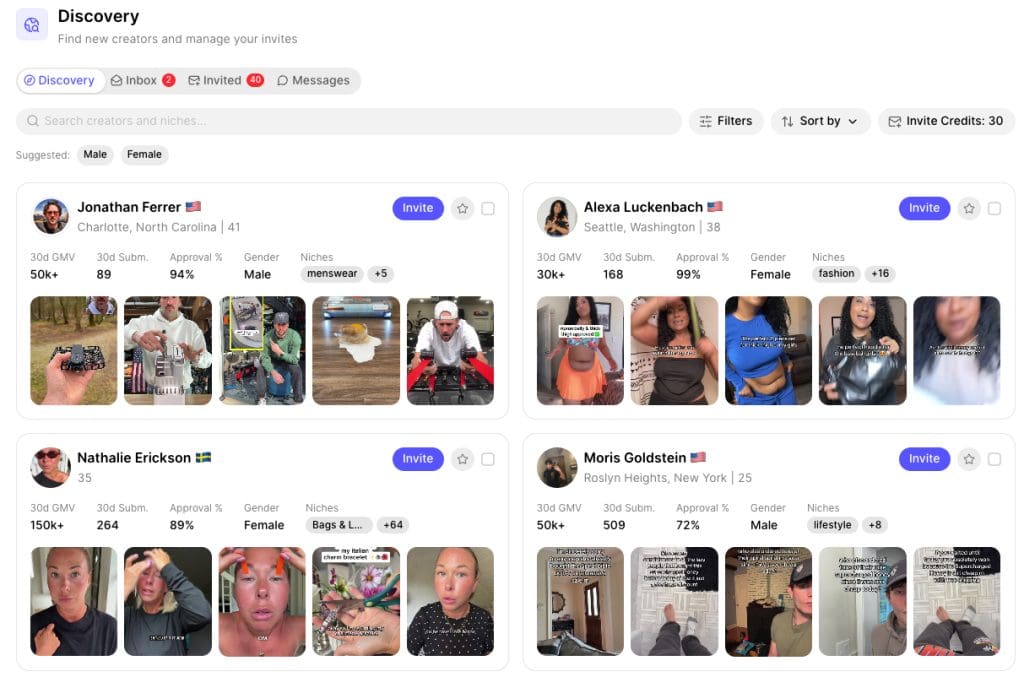
  • Recruiting: creators apply to your program, or you search Trybe’s creator directory and invite them directly. Each profile shows the creator’s sales driven in the last 30 days, submission volume, approval rate, and niches, so you can recruit proven performers instead of guessing. Direct invites use invite credits, so pick carefully.
  • Submissions: approve, revise, or reject videos in bulk, with AI tagging by angle, persona, and creative style.
  • Seeding: creators request product samples inside the app, synced to your Shopify catalog.
  • Communication: built-in chat with creators, so feedback doesn’t get lost across email and DMs.
  • Launching: push approved videos to Meta as whitelisted or Partnership Ads in a few clicks. NEW! Trybe also just rolled out Tiktok Ads Manager compatability and says YouTube is on the way next!
  • Attribution and payouts: server-side last-click attribution ties each sale to a creator, and Stripe-powered payouts run automatically.

Brands on the platform include Cuts Clothing, Cal AI, Wispr Flow, BYLT Basics, Sand Cloud, and Promix.

Why the model is smart

It flips the risk. Traditional UGC means paying a flat fee for every video before you know if any of them work. Trybe lets brands pay on performance instead: a percentage of attributed sales or ad spend, a flat fee, or a mix. Creators we’ve seen on the platform commonly earn 10% to 15% of GMV on content the brand runs. You pay most when a video is making you money.

It matches how Meta buys now. When creative is the targeting, the brand with 200 distinct concepts beats the brand with 20. Trybe’s model encourages creators to submit many takes, so you’re testing hooks, personas, and angles you’d never have briefed yourself.

It collapses the whitelisting bottleneck. Getting creator ad permissions is usually a chain of DMs and access requests. Here it’s built into the approval step, so a winning video can be live as a Partnership Ad the same day.

The platform fee is low. Trybe is free to start with no seats, contracts, or minimums, and its fee tops out at 1.5%. The full cost picture is in the next section.

The results brands report are big. Trybe’s own case studies show Final Boss Sour going from $300K to $2.1M a month in Meta-attributed revenue while CPA dropped from $35 to $20, and JiYu scaling DTC revenue from $50K to $2.5M a month in six months. Treat vendor case studies as best cases, not benchmarks. They still show what the ceiling looks like.

What Trybe actually costs a brand

Trybe’s platform fee is small, but it isn’t the whole bill. Here’s what a brand actually pays.

1. Trybe’s platform fee. One rate, based on how you pay creators, never stacked:

How you pay creators

Trybe’s fee

Commission on sales

1.5% of attributed sales

Commission on ad spend

1.25% of ad spend

Flat fees, retainers, or bonuses

1.5% of creator earnings

2. Creator pay. This is the biggest line item. Creators commonly earn 10% to 15% of the sales their content drives, and you set the rate.

3. Ad spend. Creator videos earn most of their money as paid ads, so budget to run and scale the winners.

4. Product. Free samples shipped to every creator you accept.

5. Team time. Someone has to review submissions, give feedback, check compliance, and launch ads. At hundreds of videos a month, that’s a real workload.

A simple example: creator ads drive $50,000 in sales at a 10% commission. The brand pays $5,000 to creators and $750 to Trybe, plus the ad spend behind those sales and the cost of samples. The difference from traditional UGC is that you pay as results come in, not before.

Why the timing matters: holiday 2026 and 2027

For holiday, the window is now, and it’s short. A creator program needs time to ramp: recruiting creators, shipping samples, collecting submissions, and testing enough ads to find winners. If you want proven creative scaling into Black Friday and Cyber Monday, you need to launch in early October. Start in mid-November and you’re testing when you should be scaling.

Holiday demands more creative, not less. CPMs climb, audiences see more ads, and fatigue hits faster. Gift-angle, bundle, and offer-specific creative all need fresh variations. A performance-paid creator bench is the most cost-efficient way we know to refill the pipeline weekly without a production budget spike.

For 2027, it’s infrastructure. The brands that build a creator bench this quarter walk into January with hundreds of tested concepts, data on which angles and personas convert, and a roster of proven creators. That compounds. Brands that wait will be starting cold while their competitors are iterating on winners.

Where it breaks

Trybe is a tool, not a strategy. You still need a creative strategist guiding your creators and running and optimizing your ads, videos, statics and entire funnel strategy.  The same features that make it powerful create predictable failure modes:

  • Volume without direction. Creator reviews note that some brands seem to want lots of drafts and care less about quality or original ideas. Without sharp briefs and clear creative angles, you get 300 versions of the same mediocre video.
  • Approved but never run. Creators report brands approving videos and then sitting on them for months. That kills your reputation on the platform, and the best creators stop submitting.
  • Saturation on popular programs. Big brands attract thousands of creators. One creator noted Cuts Clothing had roughly 3,200 accepted creators and 7,300 submissions. Standing out as a brand requires responsive communication, fast approvals, and fair commissions.
  • Attribution is a choice, not a truth. Trybe’s server-side last-click model is useful, but it will disagree with Meta’s reporting. Decide up front which model you pay creators on, and stick to it.
  • Meta-first. The ad-launching workflow is built around Meta. If TikTok or YouTube is your main channel, plan for manual steps.

None of these are reasons to skip it. They’re reasons to run it with a system.

Supplement and regulated brands: scale the creative, not the risk

This is the part most Trybe coverage skips. When a brand runs a creator’s video as an ad, the brand owns every claim in it. For supplement, wellness, and CPG brands, that matters a lot. (It’s why we built our supplement marketing practice around compliance.)

Hundreds of creators improvising scripts will produce disease claims (“cured my anxiety”), unsubstantiated results (“lost 20 pounds in a month”), and missing endorsement disclosures. Each one is an FTC or FDA exposure the moment it’s whitelisted, and the brand is the one on the hook.

The fix is a compliance layer built into the workflow, before anything reaches Meta:

  • Briefs that spell out approved structure/function language and banned claim types.
  • A claims review on every submission before approval, not after launch.
  • Clear disclosure requirements for Partnership Ads and any organic cross-posting.
  • A “do not run” library so creators learn the boundaries fast.

Done right, compliance doesn’t slow a creator program down. It keeps your winning ads from getting pulled at the worst possible moment.

How Forge runs Trybe programs

Forge manages Trybe creator programs for DTC brands as part of our influencer marketing services, and our team includes active Trybe creators, so we see the platform from both sides. We handle the parts that decide whether a program works:

  1. Program design: commission structure, product selection, and creator recruiting criteria.
  2. Creative direction: briefs built from your best-performing angles, updated weekly from submission data.
  3. Compliance review: claims and disclosure checks on every submission, built on 10+ years of brand-side supplement experience.
  4. Media buying: launching, testing, and scaling winners in Meta alongside your existing account structure.
  5. Creator management: fast approvals and responsive communication, so top creators keep choosing your program.

If you want proven creator ads running by Black Friday, the time to start is this month.

Start your Trybe program here, or book a call with Forge and we’ll build it with you.

Disclosure: Forge Digital Marketing is a Trybe agency partner, and the link above is our referral link. We may earn a commission or credit if you sign up through it. Trybe is free to join either way.

Sources

0

Marketing

The short answer

In Forge Digital Marketing’s analysis of six DTC ecommerce brands, the median brand had 27.28% of total store revenue attributed to Klaviyo over a 90-day period, with individual brands ranging from 15.16% to 47.77%.

Klaviyo has even published a recent DTC playbook built around helping brands move toward approximately 30% email-attributed revenue, with a model where automated flows contribute roughly 15–20% of total store revenue and campaigns help make up the remainder.

But here is the part that gets missed:

There is no universal percentage of revenue that Klaviyo “should” generate.

A store showing 35% Klaviyo-attributed revenue can have an incredibly sophisticated retention program.

Or it can have a struggling acquisition program, an overly generous attribution model, a shrinking customer base, or a business that has become too dependent on discount-heavy email campaigns.

Meanwhile, a rapidly scaling Shopify brand might have Klaviyo showing only 18% of total revenue while its retention program is performing extremely well.

The percentage is a clue. It is not the diagnosis.

At Forge Digital Marketing, we look at the entire lifecycle system before deciding whether a Klaviyo account is healthy.

First: What Does “Klaviyo Revenue” Actually Mean?

When Klaviyo tells you it generated $100,000 in revenue, it does not necessarily mean customers would have spent $0 without those emails.

It means Klaviyo attributed those purchases to messages based on its attribution rules.

For new accounts, Klaviyo currently defaults to a five-day attribution window for email clicks and opens, although those settings can be customized. Klaviyo uses a last-touch approach within its applicable attribution windows.

That distinction matters.

Imagine a loyal customer receives an email Tuesday morning. They open it.

On Thursday, they independently Google your brand, return to the website, and purchase something they buy every three months anyway.

Depending on your attribution settings, Klaviyo may receive credit for that purchase.

Did email contribute? Possibly.

Did that email single-handedly create the sale? That’s much harder to prove.

This is why attributed revenue is not the same thing as incremental revenue.

And it is one of the biggest mistakes we see brands make when evaluating email marketing performance.

So Is 30% of Revenue From Klaviyo Good?

Usually, yes… but we need context.

A recent Klaviyo-hosted DTC playbook uses approximately 30% email-attributed revenue as a scaling target for a mature email program. That’s a perfectly reasonable directional benchmark.

But we’d never audit a client by simply saying:

You’re at 27%, so you’re good.

Instead, we’d ask:

Where is that 27% coming from?

If 15% is coming from sophisticated automated lifecycle flows and another 12% comes from well-segmented campaigns, that’s interesting.

If almost the entire 27% comes from sending 25%-off coupons to the whole list four times a week, that’s a completely different situation.

Same revenue percentage. Completely different business health.

What We Found Across Six DTC Ecommerce Brands

To put the usual Klaviyo revenue benchmarks into context, Forge Digital Marketing analyzed six DTC ecommerce brands using Shopify and Klaviyo over the same 90-day period: July 9 through October 6, 2026.

Across the six brands, total ecommerce revenue was approximately $1.77 million, with $513,121 attributed to Klaviyo.

The most useful finding wasn’t a single magic percentage. It was the amount of variation between brands.

Forge’s 2026 DTC Klaviyo Revenue Snapshot

  • Median percentage of store revenue attributed to Klaviyo: 27.28%
  • Average across the six brands: 29.17%
  • Lowest observed: 15.16%
  • Highest observed: 47.77%
  • Median share of Klaviyo revenue generated by automated flows: 51.09%

Klaviyo-attributed share of total store revenue, by brand

Six DTC ecommerce brands, July 9 – October 6, 2026. Median: 27.3%. Scale: 0–50%.

Brand A · Food & beverage
47.8%
Brand B · Food & beverage
15.2%
Brand C · Botanical supplements
39.7%
Brand D · Supplements
28.2%
Brand E · Apparel
26.4%
Brand F · Sporting goods
17.9%

Source: Forge Digital Marketing analysis of six Forge-managed DTC ecommerce accounts.

In other words, the middle of our sample landed remarkably close to the often-discussed 30% Klaviyo revenue benchmark. But individual businesses ranged from just over 15% to nearly 48%.

That’s exactly why we don’t believe Shopify brands should evaluate their retention program against one percentage in isolation.

Perhaps the clearest example came from two brands in the same broad food and beverage category. One had 47.77% of store revenue attributed to Klaviyo, while the other had just 15.16% attributed to Klaviyo during the exact same 90-day period. Same broad industry. Dramatically different revenue contribution.

Factors like acquisition mix, list maturity, purchase frequency, customer behavior, campaign cadence, flow architecture, and attribution can all change what a healthy Klaviyo revenue percentage looks like.

A Note About the Data

This is a small observational sample of six Forge-managed DTC ecommerce brands, not a representative study of the entire ecommerce industry. Brands span food and beverage, supplements, apparel, and sporting goods.

All accounts were evaluated using the identical 90-day date range. Revenue figures reflect Klaviyo-attributed revenue under the attribution configuration in each account at the time of analysis. Because attribution settings and business models can differ between brands, these findings should be treated as directional real-world data rather than a universal benchmark.

And that’s really the point. Our six-brand sample had a median Klaviyo contribution of 27.28%—but individual brands ranged from 15.16% to 47.77%.

There is no single percentage that determines whether your Klaviyo account is healthy.

Flows and Campaigns Were Nearly Evenly Split

Across the six accounts, automated flows represented an average of 50.10% of Klaviyo-attributed revenue, with a median of 51.09%. Measured by total dollars across the entire sample, flows produced 53.76% of Klaviyo-attributed revenue, while campaigns produced 46.24%.

Individual brands varied substantially, however. Some generated nearly two-thirds of Klaviyo revenue through flows, while others generated roughly two-thirds through campaigns. That variation is another reason we don’t believe there is one universal “healthy” Klaviyo revenue mix.

So what is the difference between flow revenue and campaign revenue—and what should a mature account look like?

The Difference Between Campaign Revenue and Flow Revenue

One of the first things we look at is how Klaviyo revenue is divided between campaigns and flows.

Campaigns

Campaigns are scheduled sends: product launches, promotions, educational content, seasonal messages, newsletters, product features, sales, and other broadcasts.

Campaign revenue requires ongoing effort. Stop sending campaigns and that revenue usually slows down quickly.

Flows

Flows are automated lifecycle journeys triggered by customer behavior.

Think:

  • Welcome

  • Browse abandonment

  • Product abandonment

  • Cart abandonment

  • Checkout abandonment

  • Post-purchase

  • Cross-sell

  • Replenishment

  • Review requests

  • Winback

  • VIP

  • Customer education

  • Subscription lifecycle

These are fundamentally different assets.

A great abandoned checkout flow might run for years, automatically generating revenue every day as new shoppers enter it.

And the performance difference can be substantial.

Klaviyo’s published benchmarks report average revenue per recipient of approximately $0.11 for email campaigns compared with $1.94 across automated flows. Welcome flows average roughly $2.65 per recipient and abandoned cart flows approximately $3.65, although results vary significantly by industry, AOV, audience, offer, and account quality.

That is why we care so much about flow architecture.

Your campaigns monetize your audience today.

Your lifecycle infrastructure monetizes customer behavior continuously.

A Better Question Than “What Percentage of Revenue Should Email Generate?”

Instead of asking only:

“What percentage of our revenue comes from Klaviyo?”

Ask:

“Are we capturing as much revenue as reasonably possible from the customers and prospects we already have?”

That question leads to a much better audit.

At Forge, we would evaluate at least seven areas.

1. Revenue Contribution

Yes, start with total Klaviyo-attributed revenue.

But look at it over time.

Is the percentage increasing? Decreasing?

Did it change because Klaviyo improved—or because Meta spend was cut in half?

Did total store revenue grow while Klaviyo revenue stayed flat?

Percentage alone cannot answer those questions.

2. Flow Coverage

Before obsessing over subject lines or button colors, ask whether the account is actually covering the important stages of the customer lifecycle.

A surprising number of brands have a welcome series, abandoned cart flow, and maybe a post-purchase email—and believe their automation system is finished. It isn’t.

The correct flow architecture depends on the business.

A skincare company may need replenishment, education, cross-sell, review, VIP, subscription, and product-specific journeys.

A high-AOV furniture company may need much longer consideration and educational sequences.

A consumable product may need aggressive replenishment logic.

A gardening brand has an entirely different buying cycle again.

Good lifecycle marketing follows customer behavior. It does not follow a generic Klaviyo flow checklist.

3. Revenue Per Recipient

This is one of the metrics we care about much more than vanity engagement metrics.

Revenue per recipient, or RPR, asks a simple question:

For every person we sent this message to, how much revenue did we generate?

Two campaigns can generate the same amount of revenue while having completely different economics.

Imagine Campaign A generates $20,000 after being sent to 200,000 people.

Campaign B generates $20,000 after being sent to 35,000 carefully selected customers.

Those are not equally effective campaigns.

This is why segmentation matters. More sends do not automatically mean more profitable email marketing.

4. List Growth

Email cannot become a major revenue channel if qualified people aren’t entering the ecosystem.

We look at:

  • Signup form performance
  • Traffic-to-subscriber conversion
  • Offer strategy
  • Mobile vs. desktop experience
  • Lead quality
  • Email vs. SMS acquisition
  • Where subscribers came from

A Klaviyo strategist cannot compensate forever for a brand that isn’t acquiring new customers or subscribers. Retention and acquisition are connected.

5. Deliverability and Engagement

You can technically increase email-attributed revenue in the short term by sending more email. That does not mean you should.

If increased sending causes falling engagement, rising unsubscribes, spam complaints, or worsening inbox placement, today’s additional revenue can become tomorrow’s deliverability problem.

Healthy email marketing is not:

“How many emails can we possibly send?”

It is:

“How much relevant communication can this audience support?”

That threshold is different for every brand and every segment.

6. Repeat Purchase Behavior

This is where we zoom out from Klaviyo entirely.

Suppose email revenue looks great.

Are customers actually buying again more frequently?

Is repeat purchase rate increasing?

Is customer lifetime value improving?

Are first-time customers becoming second-time customers?

Are second-time customers becoming loyal customers?

Are winback campaigns actually changing behavior?

If the answer is no, then the fact that Klaviyo successfully attributed revenue doesn’t necessarily mean the retention program is doing its job.

The purpose of lifecycle marketing isn’t to make the Klaviyo dashboard look impressive.

It’s to create better customers.

7. Incrementality

This is the most mature version of the conversation.

Ask:

How much of this revenue happened because we sent the message?

That is different from asking how much revenue received attribution.

Holdout testing, control groups, cohort analysis, customer behavior, and broader ecommerce analytics can help separate correlation from causation.

You don’t need to turn every Shopify store into a laboratory.

But sophisticated brands should at least understand that:

attribution measures credit; incrementality measures impact.

Those are not interchangeable.

What If Klaviyo Is Only Generating 10–15% of Store Revenue?

Don’t immediately assume your email agency is failing. But investigate.

There are usually several possibilities.

  • Your automated lifecycle system may be incomplete.
  • Your list may be growing too slowly.
  • Your signup strategy may be weak.
  • Campaigns may be too infrequent.
  • Campaigns may be too frequent and poorly segmented.
  • Your deliverability may be damaged.
  • Your creative or offers may not be compelling.
  • Your website may have conversion problems that email cannot solve.
  • Your customers may naturally have a long repurchase cycle.
  • Your brand may currently be acquiring so many new customers through paid media that Klaviyo represents a smaller percentage of an otherwise rapidly growing pie.

Context matters.

This is why a percentage should trigger questions, not conclusions.

What If Klaviyo Is Generating 40%+ of Revenue?

This can be fantastic. It can also be a warning sign.

If you have an established brand with a large customer database, strong repeat purchasing, excellent lifecycle automation, and a highly engaged audience, a very high Klaviyo revenue contribution may be completely legitimate.

But we’d still investigate.

Has new customer acquisition slowed?

Is the brand excessively reliant on its existing customer base?

Is Klaviyo claiming revenue from very broad attribution windows?

Are frequent promotions pulling purchases forward rather than creating additional demand?

Would customers have purchased without the email?

Are discounts hurting margin?

Retention is extraordinarily powerful.

But eventually, you need new customers to retain.

A DTC business cannot sustainably email the same audience forever.

Why Shopify Brands Should Stop Chasing One Benchmark

This is probably the most important point in this article.

Benchmarks are diagnostic tools, not business goals.

Klaviyo itself publishes performance benchmarks by factors including industry, company size, message type, and revenue band because performance varies dramatically between businesses.

A $40 consumable should not have the same lifecycle expectations as a $2,000 product.

A subscription company should not have the same retention profile as a gift brand.

A company spending aggressively on Meta should not necessarily have the same Klaviyo revenue percentage as an established business with a massive organic customer base.

And a brand doing $500,000 per year should not blindly copy the email strategy of a $50 million company.

The goal isn’t to achieve someone else’s percentage.

The goal is to understand what your customer lifecycle should be capable of producing—and identify the gaps between that potential and what you’re doing today.

The Forge Klaviyo Health Scorecard

If we were evaluating a Shopify brand’s Klaviyo program, we wouldn’t give it one score based on attributed revenue. We’d evaluate the system.

  • Revenue contribution: Is Klaviyo producing a meaningful portion of total ecommerce revenue?
  • Automation: Are the right lifecycle flows live, correctly triggered, and continuously optimized?
  • Campaign efficiency: Are campaigns generating strong revenue per recipient without exhausting the audience?
  • List growth: Are enough qualified shoppers entering the owned marketing ecosystem?
  • Deliverability: Are messages consistently reaching the inbox and maintaining healthy engagement?
  • Retention: Are customers actually becoming more valuable over time?
  • Incrementality: Do we have evidence that lifecycle marketing is influencing behavior rather than merely claiming attribution for purchases?

That gives us a much more useful picture than:

Klaviyo says 31%. Everything must be fine.

Sometimes the most dangerous dashboards are the ones where the headline number looks great.

So, How Much Revenue Should Klaviyo Generate?

Here’s the answer we’d give a Shopify founder sitting across the table from us:

For an established DTC brand, seeing email and SMS contribute a meaningful double-digit percentage of revenue is normal, and roughly 20–30%+ in attributed revenue can be a very healthy result.

A recent Klaviyo-published DTC framework specifically targets approximately 30%.

But we would never judge your account from that number alone.

We want to know:

  • Where the revenue comes from
  • How much comes from flows versus campaigns
  • How efficiently you’re generating it
  • Whether your list is growing
  • Whether customers are buying again
  • Whether deliverability is healthy
  • Whether the program depends on discounts
  • Whether the revenue is actually incremental

Because the goal isn’t to build a Klaviyo account that looks good in Klaviyo.

The goal is to build a retention engine that makes the entire ecommerce business more valuable.

Frequently Asked Questions

What percentage of Shopify revenue should come from email marketing?

There is no universal benchmark. For established DTC ecommerce brands, a meaningful double-digit contribution is common, and roughly 20–30%+ in attributed email and SMS revenue can represent a strong program. However, acquisition mix, repeat purchase behavior, list size, product category, attribution settings, and customer lifecycle all affect this percentage.

Is 30% of revenue from Klaviyo good?

Generally, yes. Approximately 30% Klaviyo-attributed revenue can indicate a healthy retention program. But the composition matters. Revenue generated by sophisticated automated flows and segmented campaigns is very different from revenue generated by repeatedly discounting to the entire list.

Can Klaviyo over-report revenue?

Klaviyo reports attributed revenue, meaning purchases that meet its attribution rules after a subscriber interacts with a message. Attributed revenue should not automatically be interpreted as completely incremental revenue. Klaviyo allows brands to change their attribution settings and compare attribution models.

Should flows or campaigns generate more Klaviyo revenue?

There is no universal split, but flows should represent a meaningful portion of a mature retention program. Automated flows also tend to generate substantially higher revenue per recipient than standard campaigns because they’re triggered by customer behavior and purchase intent.

What Klaviyo flows should every Shopify store have?

Most stores should evaluate a welcome series, browse abandonment, product abandonment, cart or checkout abandonment, post-purchase, cross-sell, review, winback, and customer education journeys. However, the exact architecture should reflect the brand’s products, purchase cycle, customer behavior, and business model.

Why is my Klaviyo revenue percentage low?

Common reasons include missing flows, weak signup forms, poor list growth, low campaign frequency, poor segmentation, deliverability problems, weak offers, site conversion issues, or a business that is currently acquiring large numbers of new customers through other channels.

How do I know whether my Klaviyo account is performing well?

Don’t rely on one metric. Evaluate attributed revenue, revenue per recipient, flow coverage, campaign efficiency, list growth, deliverability, conversion behavior, repeat purchase rate, customer lifetime value, and—where possible—incrementality.

Want to Know What Your Klaviyo Account Should Be Generating?

Every ecommerce business has a different customer lifecycle.

That’s why Forge Digital Marketing doesn’t start a Klaviyo engagement by dropping your company into a template.

We work with DTC ecommerce brands to understand the business behind the account—how customers discover you, what makes them purchase, when they’re likely to buy again, where revenue is leaking, and which lifecycle opportunities you’re currently missing.

Then we build the email and SMS system around that.

If you want to know where your Klaviyo account is leaving revenue on the table, talk to Forge Digital Marketing.

Get a Klaviyo Audit

0

eCommerce, Email Marketing, Marketing, SMS Marketing

Last updated: June 16, 2026

With Klaviyo integrations you can retrieve and turn ecommerce marketing data into paying customers.  In 2022 Klaviyo helped its users generate $2.2B in revenue via email and SMS on Black Friday sales alone. We can only expect more in 2026  Klaviyo provides a robust technology that allows you to automate your email marketing and SMS campaigns at the click of a button.  What’s more, Klaviyo’s advanced features are tailored to help your business retain and gain new customers while you channel your energy into delivering the best product or service.  But first, you must spare a moment to understand how Klaviyo integrations can help your eCommerce business grow and achieve success this year.  

Klaviyo Ecommerce Integrations

Klaviyo is not just an email marketing and SMS powerhouse. This platform is known for providing rich integrations with ecommerce platforms such as Shopify, WooCommerce, Facebook Ads, Google Ads, Tapchart and Magento.  But that’s only the tip of the iceberg.  There are over 300 different Klaviyo integrations for any ecommerce platform to choose from.  Integrations are what sets Klaviyo apart from other marketing platforms because they allow you to automatically track, analyze and manage your customer behaviour.  With the data you’ll get after integrating Klaviyo, you can gain strategic insights that will give your business a competitive edge.  And of course — with the right metrics at your fingertips — you can provide excellent customer service to keep your customers loyal.  If your business is running on any ecommerce platform, rest assured that Klaviyo has a lightning-fast integration to support it.  Let’s delve deeper into how you can integrate your eCommerce platform with Klaviyo. 

How to integrate your Ecommerce platform with Klaviyo

Integrating your ecommerce platform with Klaviyo starts with signing up for a free Klaviyo account. The entire process takes less than two minutes.  Klaviyo allows you to start integrating your ecommerce store immediately after signing up.  However, if you decide to skip the process you should arrive at a screen that looks like this:  You can always log in and integrate your ecommerce platform, by clicking your account name on the lower left corner of your dashboard and clicking integrations on the next pop-up.  The next page will show you hundreds of Klaviyo integrations you can choose from. You can do it in a few simple clicks.

Be sure to have your API key from your website handy.   After integration, Klaviyo can synchronize data from your ecommerce platform. That gives you insights and metrics which can be turned into revenue if maximized. 

Top 7 Klaviyo integrations

Let’s talk briefly about some of the most used Klaviyo integrations. Remember, there are hundreds of Klaviyo integrations for ecommerce businesses today. 

1. Shopify integration

If you have a Shopify store, Klaviyo integration can help bring the data of your customers into Klaviyo. That will allow you to get insights into what customers are doing on your site and their buying patterns. This is ultimately crucial for making better business decisions. 

2. Woocommerce integration

With Klaviyo Woocommerce integration you can send targeted emails to customers, create automated workflows and also synchronize the historical data of your customers. 

3. Optin Monster Klaviyo integration

Klaviyo Optin Monster integration allows you to create irresistible, high-performing pop-up forms to better retain customers and reduce the bounce rate from your site. 

4. Facebook Ads integration

Klaviyo Facebook integration will help you to collect email addresses from Facebook ads, create custom audiences and advertise to inactive customers. 

5. Gatsby Klaviyo integration

Gatsby Klaviyo integration will help you to gather data about your customers on Instagram. This is one powerful tool that can help a brand view metrics of its customers, run automated campaigns and find micro-influencers. 

6. Zendesk integration

Zendesk is a powerful tool for customer service. By integrating your Zendesk with Klaviyo you can sync data between both platforms which will enable you to target your customers based on the interactions with your support team.  

7. Tapcart integration

Tapcart Klaviyo integration can help you create a mobile app for your ecommerce store without coding. With that, you can send push notifications to your customers such as abandoned cart notifications and new product alerts. 

FAQs on Klaviyo integration 

What is the best use of Klaviyo integrations?

One of the best uses of integrating Klaviyo with your site is automation and data science. Klaviyo is also perfect for email marketing, SMS, promotions and customer service. 

How many Klaviyo integrations are allowed on my account?

Klaviyo only supports one integration per account. That means you can’t integrate more than one ecommerce platform on your Klaviyo account.  The only way around this is to create other Klaviyo accounts, particularly if you have more than one ecommerce store for the same business.  

Is it possible to send custom data to my Klaviyo account after integration?

YES. Klaviyo’s flexible APIs allow you to easily import custom data to your account.  Check out how to manually import data into your Klaviyo account. 

Exactly how many Klaviyo integrations are there?

Klaviyo has every integration known to man, according to Maple.  But our research shows us that there are 315 Klaviyo integrations.  However, Klaviyo attests that it is possible to find a few ecommerce platforms that don’t support Klaviyo integration. 

Klaviyo does not integrate with my ecommerce platform, what do I do?

If Klaviyo doesn’t support your ecommerce site, you can contact them and they will get it done quickly.

Wrapping up

Klaviyo integrations are easy and free to set up.  With Klaviyo integrations properly set up for your business, it’s possible to generate a minimum of 25% of your monthly ecommerce revenue through Klaviyo in your first month. The system is that good.  Besides the revenue that follows Klaviyo integration, it’s arguably the best platform when it comes to ecommerce automation and creating a varied list of workflows.  It’s time for you to take a closer look at what Klaviyo can do for your business by signing up. 

0

eCommerce, Email Marketing, Marketing

Last updated: June 16, 2026

Klaviyo Shopify integration is simpler than ecommerce enthusiasts make it sound. In fact, the entire process can be completed in minutes if one follows a few simple steps.  Once integrated with Shopify, Klaviyo will synchronize all the data from your store and allow you to efficiently run SMS and email marketing campaigns, create automated flows and so much more.  In 2022, eCommerce brands leveraged Klaviyo to generate over $2 billion in revenue. That was only possible because those businesses took the extra step to integrate their ecommerce platform with Klaviyo.  Now, let’s help you integrate your Shopify store with Klaviyo. 

How to integrate Shopify with Klaviyo 

You have to do it from your Klaviyo account. Log in to begin or create a new account for free. Klaviyo allows you to integrate Shopify straight from the account setup wizard. Alternatively, you can add Shopify from the integration tab in your Klaviyo dashboard.   Click on your account name in the lower left corner of your dashboard. Next, click on Integration.  On the integrations page, scroll down or search for Shopify. Click on Add Integrations on the right. On the next page, paste the URL of your Shopify store. It must be in the format mystore.myshopify.com as shown in the URL placeholder

Additional configuration settings

Sync your Shopify email subscribers to Klaviyo: this automatically adds all your customers who subscribed to email marketing while shopping with you on Shopify. Next, select a list to add those subscribers from the dropdown menu — preferably Newsletter. You can do the same for your SMS subscribers if you have activated your phone number on Klaviyo. Sync data to Shopify: We recommend selecting Sync all profiles. That way the two sites will have a complete handshake. Finally, click on Connect to Shopify. On the next page click on Install App at the top right of your screen or bottom left.   You’re all set. Your Shopify store is now integrated with Klaviyo. 

How to integrate Klaviyo with Shopify Plus

Shopify Plus is basically Shopify with more advanced features.  When you integrate your Shopify store with Klaviyo, Klaviyo sees it as a Shopify Plus store — that’s if your Shopify domain is for a Shopify Plus account.  You won’t find a Shopify Plus integration app on Klaviyo because it’s the same as normal Shopify. 

Key Benefits of Integrating Shopify Plus with Klaviyo (vs standard Shopify)

  • You’re allowed to edit your Shopify checkout to include a custom opt-in language, premium Klaviyo forms and lots more. 
  • You can disable transactional emails in Shopify and send them through Klaviyo. This creates a seamless brand experience.

Benefits of Klaviyo Shopify integration

Data management. This is one of the greatest benefits of integrating Shopify with Klaviyo. Doing this allows Klaviyo to synchronize historical data and other transactional data. Thus, you can create tailored email marketing campaigns, flows with triggers and scale your business. Klaviyo support can help you do this.  Customer support. Klaviyo will help you understand your customers’ needs and serve them better. The impact of this on brand loyalty cannot be overemphasized.  Audience segmentation. Klaviyo integrations allow you to segment audiences based on the customer data retrieved from Shopify such as purchase frequency, cart abandonment, items purchased, conversions and more. Automation. Klaviyo integration with Shopify opens the door to automated email and SMS marketing campaigns. This allows you to focus more on the business side of things. Study shows that automated campaigns generate 4x more revenue compared to others. 

FAQs on Klaviyo Shopify integration

How much does it cost to integrate Shopify with Klaviyo?

Integrating Shopify with Klaviyo will not cost you anything, however, there’s a cost when you try to take your email marketing to the next level.  Klaviyo email marketing is free for 0-250 email contacts. You also get 150 SMS/MMS credits free.  However, Klaviyo costs $35 per month for businesses with more than 250 email and SMS subscribers. Check out Klaviyo’s full pricing. 

How do I integrate my Shopify customers with Klaviyo?

Your Shopify customers will automatically show up in your Klaviyo data when you integrate Shopify as shown earlier.  However, you have to make sure you select Newsletter when syncing your Shopify email subscribers to Klaviyo.  To do it, select your account name in the bottom left of your Klaviyo dashboard and click on Integrations. Select Enabled Integrations and click on Shopify. That will take you to your Shopify integration settings page.  Below Sync settings, on the From Shopify tab, select the box next to Sync your Shopify email subscribers to Klaviyo.

What Shopify data does Klaviyo sync? 

After integration, Klaviyo syncs events data, profile data, catalogue data, email subscribers, customer phone numbers and lists.  For historical data, Klaviyo syncs data from your Shopify account in the last 90 days. That allows you to engage with and gain insight on some of your most recent customers. 

What other brands can be integrated with Klaviyo?

Besides Shopify, other big ecommerce platforms that can be integrated with Klaviyo include Woocommerce, Wix, Magento, Facebook, Google, Magenta, BigCommerce, Aftership and numerous others. 

What kind of platform is Klaviyo? 

Klaviyo is arguably the best marketing and automation platform built to support ecommerce businesses of all sizes. Klaviyo is not an ecommerce platform on its own as you can’t buy or sell on it. 

Final takeaway

Integrating Klaviyo with Shopify is an easy and straightforward process that can be completed in minutes as we have shown.  Shopify, as powerful and profitable as it is, can be turned into a different beast when integrated with Klaviyo.  The benefits of integrating Shopify with Klaviyo are numerous, most of which have already been highlighted here. We recommend that you sign up for a Klaviyo account if you’re serious about taking your ecommerce marketing to the next level. That’s if you haven’t done so already.
0

eCommerce, Email Marketing, SMS Marketing

Last updated: June 16, 2026

Integrating WooCommerce with Klaviyo is capable of unlocking serious business growth, better customer relations, untapped revenue and higher conversion. 

Since 2011,
WooCommerce has helped more than 2 million businesses launch their eCommerce brands online via WordPress.   

For a real example of the results this can drive, see our Klaviyo case study for Botanical Remedies.


But launching an ecommerce business is the easy part. 90% of ecommerce businesses fail or close shop within the first four months of launch,
according to Forbes. That’s where Klaviyo can help. 

Klaviyo is more than just an email marketing platform as it’s often touted. Klaviyo helps all kinds of brands better understand their customers through data. This fosters relationships and ultimately drives revenue. But first, brands must integrate their ecommerce platform with Klaviyo. 


The good news is,
Integrating Klaviyo with WooCommerce can be completed in a few easy steps, even for a novice. 


Let’s show you how to do it.  

How to integrate Klaviyo with WooCommerce

To integrate Klaviyo with WooCommerce you need to install the Klaviyo plugin from your WooCommerce site. 

Step 1. Add a new plugin. Navigate to the plugin tab and click on Add New 

Step 2. Search for Klaviyo and click on Install.

Step 3. Activate the Klaviyo plugin 

Step 4. Click on Settings

Step 5. Connect to Klaviyo. You need to get your API key from your Klaviyo account to complete this step.  

To get your API key:

  • Open a new tab and log in to your Klaviyo account. Or create one.
  • Navigate to Settings, and then click on API Keys.
  • Copy the Public API Key.
  • Return to your Woocomerce and paste it. 

Step 6. Enter your Email list ID, SMS list ID (if you have one) and select Subscribe contacts to email marketing. 

Click on Save Settings to finish. You will be prompted to confirm your Klaviyo WooCommerce integration by granting full access to Klaviyo.

Now you have integrated your WooCommerce with Klaviyo. Powerful tools and features are now at your fingertips. This will give you clear insights into your customer data to drive engagement and revenue. 

How to be sure your Klaviyo WooCommerce integration is working

According to Klaviyo, there are five basic things to do to be sure your Klaviyo WooCommerce integration is working effectively. 

1. Add an item to your cart.

2. Proceed to the checkout page.

3. Fill in your email address and phone number on the checkout page. If enabled, check the boxes to subscribe to email and SMS marketing.

4. Submit your test order.


5. Check for the following (these may take a minute or two to update):

Started Checkout event logged under Recent Data
      • Profile created in the lists you selected for email and SMS marketing
      • Placed Order event logged under Recent Data


However, you need a few
tips for running a successful WooCommerce store backed by the technology provided by Klaviyo. 

6 things to know to succeed with WooCommerce after integrating Klaviyo

1. Automation

Klaviyo can transform your WooCommerce business revenue if you understand the power of automation. 

Klaviyo offers numerous built-in automation features which you can customize to suit your business needs. Examples include automated emails and SMS, notifications for abandoned carts and other personalized push notifications. 

Automation allows you to focus on making the best product while Klaviyo helps you get the word out with automated marketing campigns. 

2. Segmentation

Klaviyo customer segmentation allows you to categorize your customers based on their behaviour on your WooCommerce site. 

Segmentation allows you to send relevant messages, emails and flash notifications to each category of customers based on their purchase history, demographics, and browsing behaviour. 

Segmentation can also be used for promotions and discounts for your customers. This can be vital for your marketing campaigns and conversion rate. 

3. Data Analytics

WooCommerce allows you to add Google Analytics for data management, but Klaviyo Integrations gives you a better insight into your customer data with clear easy-to-read metrics. 

Data analytics with the help of Klaviyo will help you to understand the impact of your marketing campaigns, promotions and the overall performance of your Woocomerce store. 

What’s more, Klaviyo Analytics can tell you what your customers like on your site and what they don’t. This insight can help you improve and optimize your campaigns and offers.

4. Smart Targeting 

Smart targeting is all about doubling down on the power of personalization. With the help of data from Klaviyo, you can prepare super-relevant content and special messages and campaigns for your customers. 

You can even suggest products to customers based on their personality and set other behavioural triggers. This is known as flows on Klaviyo. 

That can give your WooCommerce business a competitive edge in the fiercely competitive ecommerce business environment we have today. 

5. Customer engagement

Customers are usually drawn to brands that put them first before their need to make money. But most brands simply do not know what exactly their customer needs. 

Klaviyo provides custom reports on your customers to help your helpdesk engage them better, that’s beside the reviews they leave on your site. 

You can also leverage Klaviyo’s custom web forms to better understand your customer needs. 

6. Run experiments 

No successful marketing campaign is set in stone. To succeed in WooCommerce after adding Klaviyo you have to carry out periodical experiments, A/B testing and continuous analysis of your data. Doing that will on improve your conversion rate and spike your revenue. 

Conclusion

WooCommerce is an easy-to-use, powerful and extensible ecommerce platform for WordPress. 

Integrating your Woocommerce site with Klaviyo has the potential to grow your ecommerce business through targeted marketing using data and cutting-edge features. 

The process of integrating WooCommerce with Klaviyo is easy and straightforward. You don’t need to hire a digital marketing expert to do it if you have read this piece. 

However, to unlock the power of Klaviyo after integrating your WooCommerce site, you have to leverage the features of the platform. 

0

Last updated: June 16, 2026

Amazon Buy with Prime was built to provide the ultimate shopping experience for customers. But for an e-commerce merchant like yourself, “Buy with Prime” can help drive higher conversion rates and an increase your revenue.

Amazon says the Buy with Prime feature button is helping eCommerce businesses increase their conversion rate by 25% by offering fast shipping and delivery, easy returns and a seamless checkout experience for customers.

Amazon’s pitch for Buy with Prime is that it allows customers to enjoy the full benefits of the Fulfilled by Amazon Program (FBA) on any ecommerce platform. But for D2C ecommerce brands like yours, this could be a goldmine!

Top 5 Benefits of Amazon Buy with Prime for ecommerce merchants

Since Amazon launched Buy with Prime in April 2022 many ecommerce merchants claim to have noticed a marked increase in their conversion rate. Brands like Trophy Skin and Wyze report a 30% increase in their conversion rate after adding the Buy with Prime button to their site.

Here are the other key benefits of using Amazon Buy with Prime

1. Customer confidence. Amazon’s popularity makes it easier for customers to trust your business when they have to checkout via the Buy with Prime button.

2. Fast shipping and delivery. Amazon Buy with Prime can fulfil orders in two days. Customers are always thrilled when their order is shipped and delivered fast.

3. Better customer relationships. Buy with Prime helps eCommerce merchants improve their relationships with customers given that orders are fulfilled professionally and returns are handled by Amazon.

4. Seller fulfilled prime. If your business is still growing and yet to have its own fulfilment operation set up, Buy with Prime is an excellent choice to help handle orders directly from your warehouse.

5. Integrates with most ecommerce sites. Amazon Buy with Prime can be integrated with nearly every ecommerce platform you can think of because Amazon provides you with an installation code which can be added to your site. There’s even an app to easily add Buy with Prime to BigCommerce.

To start enjoying the immense benefits of Amazon Buy with Prime you have to integrate it with your ecommerce store first.

Let’s walk you through how to integrate Amazon Buy with Prime to your ecommerce website.

How to add Buy with Prime to your ecommerce website

There are two basic requirements before you can add Buy with Prime to any ecommerce website:

1. A United States-based entity. Amazon Buy with Prime is only available to businesses registered and operating in the US.

2. An ecommerce website.

With those two confirmed you can now proceed to create your Buy with Prime account by following the next steps.

Step 1. Sign up. Fill in your details on the Buy with Prime signup page.

Step 2. Complete the Buy with Prime requirements.

In this section, you need to fill in your business details, link your ecommerce account and activate Buy with Prime for your products.  

Step 3. Install the Buy with Prime button code on your website theme.

You will only be allowed to create and install a Buy with Prime button code on your ecommerce site after Amazon has verified your business details.

Here’s what it will look like on your product checkout page:

When a customer clicks the Buy with Prime button on your site they will be prompted to checkout via their Amazon account. Amazon will proceed to fulfil the order.

How to add Buy with Prime to your Shopify store

If you have a Shopify store you can add Buy with Prime to your checkout page by placing the installation code inside the code of your Shopify theme.

Here are the steps to do it.

Step 1. Log in to your Shopify store

Step 2. Navigate to Theme customization. Sales Channel > Online Store > Themes > Customize.

Step 3. Select Default Product.

Step 4. Select Purchase buttons

Step 5. Select Add Block and click on Custom Liquid on the drop-down.

Step 6. Paste your Buy with Prime button code into the editor box. Save.

Step 7. Drag the new Custom Liquid under the Add to Cart buttons.

That’s it! You’ve added Buy with Prime to your Shopify site.

Amazon Buy with Prime can be integrated with Klaviyo

Buy with Prime can be integrated with your Klaviyo account to get a bird’s eye view of what customers are doing on your ecommerce platform.

Klaviyo is a powerful marketing automation platform built for small and big ecommerce businesses. It leverages customer data to help ecommerce merchants build deeper customer relationships which are invaluable for higher conversion rates and business growth.

You can even integrate Buy with Prime with Klaviyo to get insight into your customer data, create automated and targeted marketing campaigns and set triggers based on customer behaviour on your site.

Forge can help

You can start seeing instant results in terms of your conversion rate and revenue just by adding Buy with Prime button to your ecommerce website.

Buy with Prime transfers the heavy lifting to Amazon. They handle the shipping and fulfilment. Amazon even stores the product for the seller.

However, setting up Buy with Prime for your ecommerce site can be a little tricky. In some cases, you may need some coding experience to do it right. That’s where Forge can help.

We’ve helped many ecommerce businesses add the Buy with Prime feature to their websites in minutes and we can do the same for you. Contact us to get it done and start scaling your conversion rates into the stratosphere!

0

Email Marketing

Last updated: June 16, 2026

“If your successful email marketing campaign suddenly goes silent, chances are, market trends shifted while you were high-fiving your team.” — Mediatool.

Digital marketing is a numbers game and everyone needs email to win, particularly when email marketing has become one of the top marketing channels of the 21st century. But the prevailing trends continue to change as innovation and new techniques flood and transform the email marketing landscape. The changes have brought profits for brands that go with the flow. Many businesses that stay on top of the email marketing trends record up to $36 in revenue for every $1 spent. That said, let’s take a closer look at the email marketing trends of 2026.

1. Robust email security and privacy – campaigns must prioritize user consent

General Data Protection Regulation (GDPR) has changed how email marketing is done today. In 2026, brands simply cannot send unsolicited, random emails without obtaining user consent. The increase in cyber-attacks and phishing emails has made spam filters even more sensitive to suspicious content in emails. Thus, we’re seeing tracking software go the extra mile to monitor emails based on criteria like click-through rate, time spent on email and overall engagement. The impact of this trend is why email marketing campaigns must prioritize user consent options like preferences and data privacy checkboxes in opt-in and signup forms.

2. Omnichannel communication – for higher engagement

The omnichannel strategy combines multiple communication channels like email, SMS, push notifications and webchats to reach customers. This strategy started gaining prominence after the pandemic, it’s now a full-blown trend in 2026. And it’s proving successful. Email marketers are now allocating a budget for campaigns that target customers through multiple channels to give them a seamless user experience. Some customers respond well when followed up with text messages after email. For that reason, digital marketers in 2026 are smart enough to ask customers to opt into their SMS lists, push notifications and so on. Stats show that this strategy is delivering serious results too. “Brands that use both email and SMS to reach customers record 19-25% more engagement compared to 5% or less for brands that stick to only email.” — Selzy.

3. User-generated content – customers trust customers

User-generated content is created by the customer for other customers, with the selling brand reaping all the juicy benefits. In 2026, your customers have become smarter and even harder to convince than ever. However, stats have shown that customers are more open to buying when it’s some other customer doing the marketing. “95% of customers read online reviews before buying a product and positive reviews can increase customer spending by 31%” — Luisa Zhou. User-generated content, particularly reviews, has become the rave of the moment for top brands and they never miss a chance to add it to every email campaign. But user-generated content is not limited to reviews. They could be case studies, blog posts/comments, surveys and social media posts. Value everything your customer has to say about your brand, anywhere they say it.

4. Metrics changes – open rates no longer tell the true story

A few years ago, email marketing campaigns were considered successful if metrics showed a high open rate. That’s no longer the case. The 2026 trend in email marketing shows that open rates have become a poor indicator of the success of email campaigns. And that’s because of two reasons:
  1. New privacy settings from companies like Apple make it impossible to track if a user opened an email blast or not.
  2. A user opening an email doesn’t mean they read through or engaged with the content.
Hence, email marketers are now tracking other metrics that help them understand user behaviour and the performance of their email campaigns. Good examples of what metrics to track are subscribe/unsubscribe rate, email content click rate, conversion rate and ROI per campaign.

5. Mobile-optimized emails – most people check emails on mobile phone

The fastest and most convenient way to check an email for most people is via their mobile phone. That’s why email campaigns in 2026 must be optimized for mobile. Innovative mobile-friendly email design is the new trend in email marketing. Mobile-tailored emails feature a minimalist design, mobile-friendly font size, moderate animation and responsive images and GIFs. Such emails are also optimized for dark mode. Emails that are not mobile-friendly in 2026 will get fewer engagements and that could seriously harm ROI.

6. Super-personalized emails

Today’s email marketing campaigns have become super-personalized to improve user experience and engagement. Personalization of emails has proven to have a substantial impact on lead generation, customer retention and revenue. Highly personalised emails are tailor-made for the user. They are sent to segments or individuals based on their behaviour on your site, personal data, search intent and demographics. Here’s a quality example of a personalized email based on the user search intent for fintech loans: The engagement rate for such an email is above 90%. Before this trend took off, non-personalized email campaigns escaped with reasonable success. For example, in 1978, Gary Thuerk randomly sent the first email blast and recorded $13 million in sales. Fast forward to 2026, the random email strategy can be a recipe for failure.

7. AI impact – new technology doing the hard work

Artificial intelligence is here to stay and it will affect nearly everything. It’s already having a massive impact on email marketing today. AI is helping email marketers write engaging subject lines, draft powerful emails and choose the best email templates. Most AI software for email will also gather data about your audience to ensure you only send super-personalized emails, as discussed earlier. AI even allows you to choose your tone of voice, word count, structure and language. Plus it makes sure your emails are free of grammatical errors. The AI trend for email will not slow down as digital marketers continue to understand how best to use it in their strategy. The time to get on board is now.

8. Interactive emails – responsive emails drive engagement

One of the strongest email marketing trends we’ve seen lately is the transformation of email from simple plain texts to interactive content that grab the attention of the customers for maximum engagement. In 2026, brands are creating email campaigns that interest the customers by showing, instead of telling. Such emails will allow the customer to gain a live experience of the content through interactive elements like polls, animated CTAs and responsive buttons or GIFs rather than a boring block of text. Here’s one example of what an interactive email looks like for a UK-based print and design agency that gets its customers to engage with their content using a GIF for a chance to get an offer. Interactive GIF allows subscribers/customers to Engage with email content The text says ‘Chop that melon!’ with arms indicating a gesture the user has to perform. It’s just hard to ignore.

9. Email accessibility – content everyone can use

Email accessibility in 2026 is not just a trend but also an email marketing best practice. Brands think of all kinds of people when creating email campaigns, including the disabled – who make up 16% of the global population, according to the World Health Organization. Making emails accessible for all users ensures you don’t miss out on a large segment of your customer who may be physically impaired. Doing simple things like adding alternate text to images for screen readers, increasing font size slightly above 14px and ensuring that the flashing rate in animation is less than 55Hz can massively improve the accessibility of your emails.

10. Automated Email Campaigns – more results, less effort

The biggest brands in 2026 cannot manually reach out to all their prospects and customers through email. This fact is what started the automation trend in email marketing. Today there are hundreds of email automation tools built to help businesses automate their email marketing campaigns and reach a wider audience faster and more efficiently. Email automation works and brands have reported success in terms of conversion rate and customer retention after investing in it. Email automation software in 2026 are the complete package. They can segment audiences, send email triggers and workflow and conduct detailed analytics on campaigns. Combining this with AI can be explosive for business growth.

●     BONUS: Predictive analytics – using historical data to drive success

As we said at the beginning, successful email marketing campaigns can grow cold depending on changes in email marketing trends and customer behaviour. That’s where predictive analytics come in. Even without understanding all the latest email marketing trends, predictive analytics help brands understand what customers are interested in. It shows you what content will generate the best sales based on past and present behaviour. The result is that brands can use this information to revamp their marketing strategy and ride trends for years while staying profitable. According to Infinite Flame CEO Cap Hernandez, there are five ways to deploy predictive analysis for email marketing success.
  1. Set clear goals. The target of your email marketing campaign must be identified with a clear objective set.
  2. Collect accurate data. The data being used for predictive analysis must be accurate, relevant and clean. Examples of the data you need are engagement frequency, subscribe/unsubscribe rate, feedback and purchase history.
  3. Use techniques to build predictive models. Using various machine learning techniques, you can create predictive models that show customer behaviour. An off-the-shelf software like Improvado or Siesense can work or you could hire a data scientist.
  4. A/B test your models. Every predictive model you create must be tested with feedback, validation techniques and other statistical tests before you can fully trust the result.
  5. Segmentation. Using the information gotten from your analysis, properly segment your subscribers and send them personalized messages based on their needs and preferences.

How to plan your strategy using Email Marketing trends

Let’s face it, it’s almost impossible to implement all the 2026 email marketing trends regardless of how well you know them. But you can tweak your strategy using the trends as a guide. Here’s what to do. Select trends you can keep up with. You can start by picking a few trends that best fit your brand, audience and budget. Study these trends to understand them clearly and create campaigns using the knowledge. A/B Test your improved campaign. Every campaign you create based on the latest trends must be tested on a segment of your subscribers. You must be able to measure results to spot any improvements. Google Optimize, AB Tasty and Optimizely are some tools that can help. Rinse and repeat what works. Whatever you do, never change a winning formula. You can only improve it using modern techniques.

At a glance: Top 10 email best practices in 2026 you should follow

Creating and sending an email blast to your subscribers is easy. But sustaining a successful long-term email strategy requires that you follow the email marketing best practices highlighted in the graphic. Top 10 email marketing best practices

Still want help with your email marketing campaign?

We’ve detailed all the prevailing trends you should know to get ahead of your competition and stay successful. But email marketing trends will continue to change in 2026 and beyond. This makes it harder to keep up and implement necessary changes. Call us today if you still need help building a strategy based on the latest trends that resonate with your subscribers. We’d be glad to help!
0

Email Marketing

Last updated: June 16, 2026

A wise man once said: “If you shoot at nothing, you will hit it every time.” And that applies perfectly to email marketing.  The first step to any successful email marketing campaign is to determine what you want your campaign to achieve in the end and how you intend to achieve it. That’s where email marketing objectives and goals come in.  Email marketing goals are clear, specific and measurable outcomes for any email campaign.  On the one hand, email marketing objectives refer to steps that MUST be taken towards achieving the goals of your email-based campaign.  It’s obvious they don’t mean exactly the same thing, but they work hand in hand to deliver remarkable success if followed through. Goals help you stay focused and measure the success of your email campaign. For example, you can set a goal of generating 500 new leads in the next four months. Your objective will include improving email engagement and generating more traffic.  But there are other solid reasons why you should define your email marketing objectives early on. 

5 reasons why email marketing objectives and goals are important for your campaign 

1. Provides clarity 

With your goals and objectives spelt out, everyone working on your email marketing campaign will know exactly what to do, when to do it and how. Such clarity will improve efficiency and the overall success of your campaign.  Email marketing objectives give you and your team members a sense of direction and understanding towards achieving set goals. Now there’s no beating about the bush. 

2. Streamlines your effort 

Your email campaign objectives should be written down and displayed for you and your team members to see. Doing this will help you channel every effort towards meeting your campaign goals.  Having identified your campaign objectives, you won’t dissipate energy on unproductive tasks that add nothing to the bottom line. 

3. Helps you allocate resources

Defining your objectives will help you know how best to strategically channel your resources towards meeting your goals

4. Motivation

Email marketing can be tedious even for experienced email marketers equipped with all the right tools. That’s why we consider email marketing objectives as a light that guides you through a dark tunnel towards your goals. They’re that important. 

5. Helps you measure success

You can only measure the success of your email marketing campaign if you set objectives and goals in the first place.    And here are some examples of email marketing objectives that will work for any campaign. 

8 best email marketing objectives (examples) 

1. Generating traffic 

Email Marketing can be effective in driving traffic to your website and online store. But driving email traffic is not as easy as launching an email campaign. In many instances, you will not instantly see a spike in traffic for your site even with a reasonable number of subscribers. Your email marketing objective should be focused on changing that narrative.  To generate email traffic for your brand, your email campaign MUST be directed at people who are actually interested in your content and have intentionally subscribed to your mailing list. Visitors like that are more likely to respond to the CTAs and spend time on your website. Using double opt-in to add new subscribers to your list will help you build an organic list of people who are more open to responding to your campaign and landing on your site. Here’s an example of what a double opt-in email looks like.  Email marketing objectives double opt-in form Here are 5 proven ways to improve your web traffic through email marketing:
  1. Personalize your emails
  2. Provide clear and concise content in emails
  3. Include call to action between email content, not just at the bottom
  4. Use creative designs for your emails
  5. A/B test email campaigns on different segments of your audience.

2. Increasing email open rate

Stats say on average people receive 200+ emails per day with more than 50% of those ending up as spam or unread. This tells you the level of competition your email campaign is facing even before you press start. It also shows why you need to have a plan to increase your email open rate.  Email open rate is more than just the number of people who open your email. To prioritize improving this metric, you have to consider email open rate as the number of readers who open your email and also click a link in the email. Here are 5 ways how to improve email open rates:
  1. Build and organic email list. Avoid buying email list if you don’t want a low open rate.
  2. Segement your list and only send emails to the relevant audience.
  3. Update your list regularly. Remove all inactive subscribers.
  4. Use compelling subject lines for your emails.
  5. Optimize your email campaign for mobile

3. Generating more leads

Lead generation is another important objective to set for email campaigns because new customers are essential for extending the life span of any business.  With email marketing, you can build a list of prospective customers who you will eventually become loyal customers if you nurture those relationships using high-quality content and excellent communication. Have a look at this email example that engages the subscriber and baits them into becoming customers: Email marketing objective, lead generation Notice that in the above example, the email is personalized, has a professional but friendly tone and addresses a problem the reader might be trying to solve. Here are simple ways of turning leads into customers using email marketing:
  • Target the right audience. Use simple opt-in forms
  • Optimize your landing page content
  • Send timely emails. This can be immediately a prospect performs an action on your site

4. Improving engagements

A successful email marketing campaign will get more subscribers and prospects to interact with brand content and respond to CTAs. When customers engage with your campaign it ultimately results in purchases, sales and an increase in revenue.  To achieve higher engagements your strategy must put focus on content that’s valuable, attractive and personalized for your subscribers. It’s also important to write compelling subject lines.  Little things like the structure and design of your email can determine the level of engagement an email campaign attracts. Here’s an example of an email from Chelsea Football club that encourages fans to become members with just Email marketing objective building engagements with emailsFrom this example you can see that captivating email design, concise and making offers to your audience can get them to engage with your campaign. Also take note of where the CTA button is placed in this email — just two paragraphs into the content. 

5. Grow customer list

Subscriber list does not equal customer list. You can have a decent number of subscribers but only a handful of them are paying customers.  An email marketing objective to grow customer list will implement various strategic methods targeting an audience who will be interested in what the brand is offering. In 2026, brands are leveraging promotions, exclusive deals, discounts and rewards to grow their customers list. Here’s an example of an email that makes a promotional offer to subcribers based on their preferences: Promotional offer email marketing objective generating new customersMost email marking campaigns can boast of new subscribers but customers are what every business needs to survive. Pin this as your objective. Here are other methods of growing your customer list through email:
  1. Send relevant emails
  2. Make your emails consice and clear
  3. Use attractive designs
  4. Include a call to action (CTA) at the top of your email content
  5. A/B test your campaign on various audience segments to see what works best.

6. Brand loyalty 

Email marketing campaigns remains one of the oldest strategies for improving brand loyalty and retaining customers. This can be achieved by building excellent relationships with customers via email.  Using customer data from customer behavior and preferences, brands can better understand how best to tailor their marketing effort to meet customer needs.  Here are a few ways to improve brand loyalty:  1. Personalize your emails. Your emails must be tailored for the customer based on their preferences and behaviour,  2. Offer incentives. Like freebies, promotions, discounts, rewards and exclusive deals. Take a look at this example a gospel ministery offers a personalized free gift 2. Improve interactions. We already highlighted the power of engagement for email marketing campaigns. Ask for regular feedback and appreciate your customers.  3. Respond to feedback. Customers are easily frustrated when their feedback isn’t taken seriously. It’s worse when a brand takes too long to reply customer email or don’t even reply. 4. How to measure brand loyalty: Customer lifetime value, customer retention rate, customer satisfaction. 

7. Increasing conversion rate

In (email) marketing conversion rate refers to the number of subscribers that complete an action requested in an email. Conversion rate can be an accurate way to measure return on investment (ROI) for an email campaign. Your email marketing objective would be incomplete without a plan to increase your conversion rate.  Leveraging user-generated content like testimonials, images, social media posts and positive reviews can be included in emails to improve conversion rate. See this example of a resort that uses pictures shared by their customers on Instagram in their email campaign.Other strategies like including compelling CTAs, conveying a sense of urgency and personalizing the content of emails can massively improve your conversion rate. 

8. Improving sales

Email marketing can also be crucial for improving your sales if you set it as one of the objectives of your campaign.  Growing sales through email marketing would require some intentional effort on the part of the marketer.  Things like using segmentation to target specific sets of your prospects with highly personalized customers, optimizing email subjects, improving CTAs and A/B testing strategies are a must for any brand serious about improving sales. 

Bonus. Reducing bounce rate

Email bounce rate refers to the number of emails sent that never get delivered. A high bounce rate of an email campaign can lower the reputation of a brand.  To determine the percentage bounce rate of your email campaign, divide the number of bounced emails by sent emails and multiply it by 100. For example, if you send 5,000 emails and 500 bounces, your bounce rate will be 500 / 5000 x 100 which gives you a bounce rate of 10%. Your objective will be to reduce this number.  Here are 5 ways to lower bounce rate: 
  1. Implement double opt-ins in your signup forms. 
  2. Regularly cleanup your email subscriber list. 
  3. Segment your list 
  4. Stay consistent but not spammy 
  5. A/B test your emails
Now let’s talk about email campaign goals and how to set them.  

How to set SMART goals for email marketing 

Your email marketing goals must be SMART — Specific, Measurable, Achievable, Relevant, and Timely. Here’s how to set goals for your email marketing campaign. 

Email marketing goals must be specific and clear

The goals you set must be clear for every team member to understand. This helps everyone to know where they fit in and what they need to do to help the team achieve results. 

Goals for email marketing campaigns must be measurable

It is essential that your email campaign goals are measurable using predetermined metrics. This helps your team to stay focused throughout the lifespan of your campaign. 

Email marketing goals must be achievable 

When setting a goal for your email campaign, it is important to set targets that are feasible for your brand based on your budget and resources. Unrealistic goals easily overwhelm and ultimately discourage the marketer. 

Email marketing goals must be relevant 

It’s also important to set goals that will have a positive impact on your business. SMART goals for email marketing help the brand achieve its core values and bottom line. 

Email campaign goals must be time-bound

Finally, SMART goals must have a target completion date. A firm deadline to achieve your goal is essential to help you view current progress and measure success. It also helps to keep your team motivated with everyone working on the same timeline. 

Email marketing goals examples

  • Reduce bounce rate by 50% in the next 6 months. 
  • Grow email subscriber list to 2000 in the next year. 
  • Record a conversion rate of 15% in the next  six months
  • Generate $50,000 in sales in the next five months
  • Generate 1000 new leads from our email marketing campaign 

Email marketing Goals vs objectives at a glance

Email marketing objectivesEmail marketing goals
Specific actionable, milestones for a campaignLifelong aims of an email campaign 
The strategies required to achieve email campaign goalsThe end result of an email campaign 
Based on facts, data and customer preferences Based on marketing ideas 
Easy to measureDifficult to properly measure

Wrapping up…

Email marketing objectives and goals combine to deliver success for email campaigns.  In this article, we highlighted the benefits of starting your campaign by outlining your email marketing objectives right at the start of your campaign. And listed some solid examples you can copy. It’s now up to you to make use of this information and start seeing results in your email campaigns.  If you need help with taking your email marketing campaign to the next level reach out to our team at Forge. 
0

Skip to content