
TL;DR
Conversion rate optimization is the highest-leverage investment an ecommerce brand can make to scale profitably. Improving from 2% to 3% conversion can generate 50% more revenue from the same traffic and ad spend, lowering customer acquisition costs while amplifying ROI across all marketing channels. High-performing websites guide visitors toward confident purchase decisions through streamlined navigation, persuasive messaging, frictionless checkout, mobile-first design, strategic email capture, and optimized post-purchase experiences that maximize lifetime value.
Key Points
• Conversion rate directly indicates how efficiently your site turns traffic into revenue by measuring the percentage of visitors who complete purchases.
• Streamlined layouts guide customers toward purchase with clear navigation, prominent product images, and high-contrast buttons that eliminate distractions.
• Persuasive messaging builds confidence through benefit-oriented headlines, customer reviews, FAQs, and unique selling points that communicate real value.
• Frictionless checkout minimizes abandonment by offering guest options, early shipping visibility, multiple payment methods, and trust badges.
• Mobile-first design ensures fast load times under 3 seconds with intuitive experiences featuring readable text and tap-friendly buttons for the majority of users.
If your eCommerce brand is generating steady traffic, you’re already doing something right. But traffic alone doesn’t guarantee revenue. The real question is: How well is your website converting that traffic into paying customers?
For brands aiming to scale, a sub-2% conversion rate often signals missed opportunities—not just in sales, but in overall marketing efficiency. That’s where Conversion Rate Optimization (CRO) comes in.
CRO is often the highest-leverage investment an eCommerce brand can make. By increasing the percentage of visitors who convert, you improve the return on every marketing dollar—boosting revenue, lowering customer acquisition costs (CAC), and amplifying ROI across all channels. It’s the most direct path to scaling profitably without scaling spend.
What Is a Conversion Rate, and Why Does It Matter?
Your conversion rate is the percentage of visitors who complete a desired action (typically making a purchase).
If 100 people visit your site and 2 buy, your conversion rate is 2%.
Why does this metric matter so much?
Because it’s a direct indicator of how well your site is performing once traffic arrives.
Improving your conversion rate increases revenue without increasing your ad spend—making your acquisition efforts far more efficient.
If you’re wondering where to check your conversion rate – Shopify makes it easy and keeps that metric highly visible on your homepage dashboard:
Google Analytics 4 is another useful tool to check your conversion rate if you’ve had it installed and running on your store for at least 30 days to gather this data.
Example: Monthly Revenue Impact of Conversion Rate Uplift

The graph compares monthly revenue at 2% vs. 3% conversion rates across various ad spend levels, assuming a $75 average order value.
For example, with a $10,000 monthly ad spend, a 2% conversion rate yields approximately $15,000 in revenue, while a 3% conversion rate increases that to $22,500—a 50% lift without any increase in traffic or budget.
This illustrates the powerful compounding effect of improving conversion rates.
What Makes an eCommerce Site Convert?
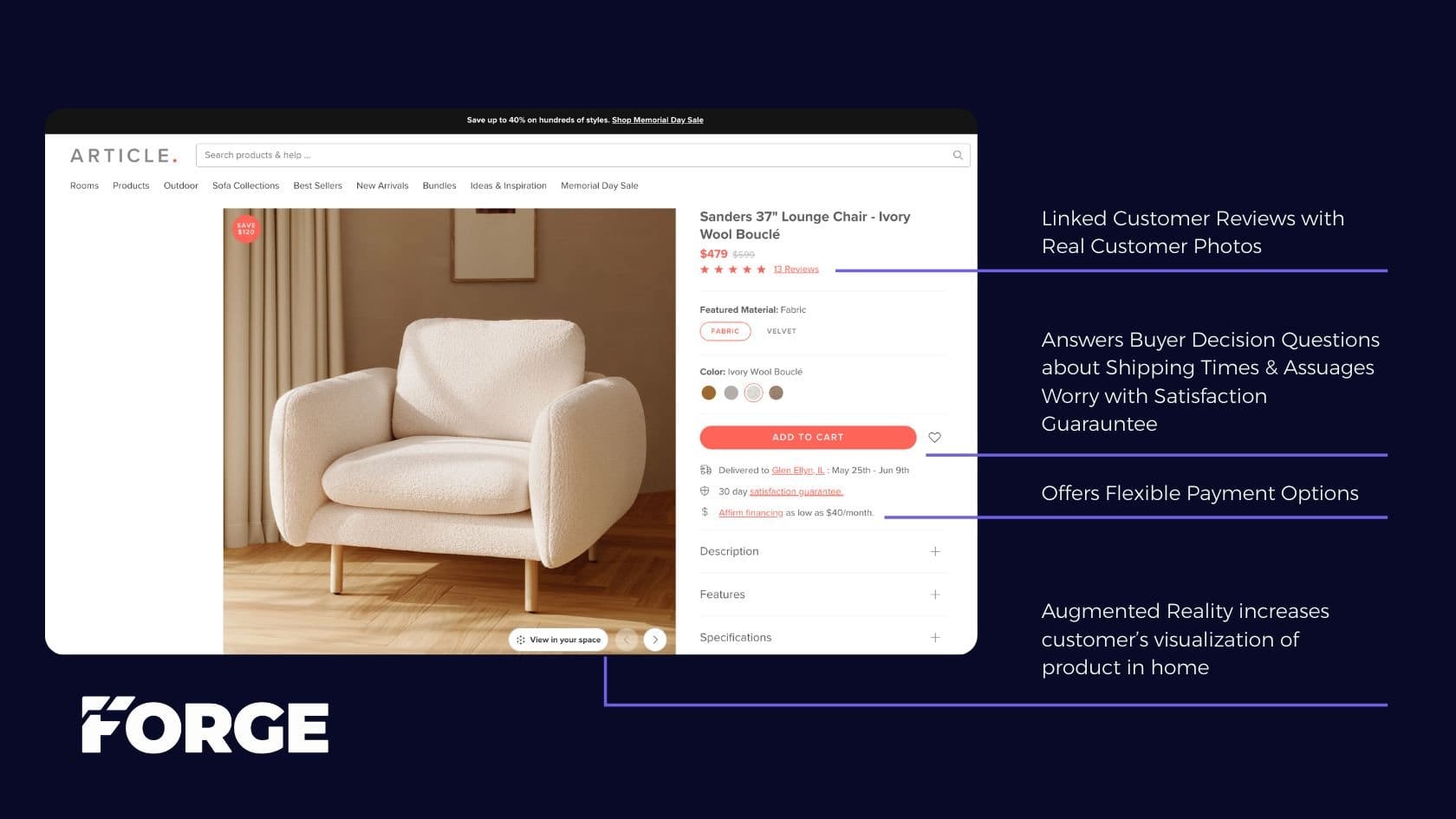
The best-performing eCommerce websites don’t just look polished—they’re designed to guide visitors toward a confident, frictionless purchase decision. Below is a step-by-step breakdown of what that requires.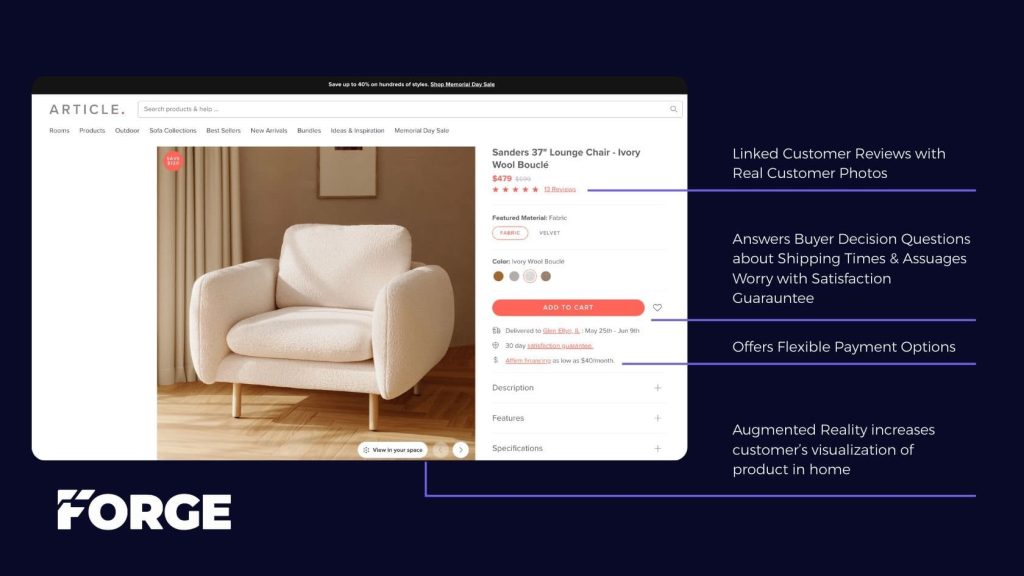
1. Streamlined Page Layout and Navigation
Help visitors find what they need and stay focused on buying.
- Clear, minimal navigation (especially on mobile)
- Prominent product images with zoom and alternate views
- High-contrast, well-placed “Add to Cart” buttons
- Avoid distractions that pull users away from the path to purchase
Your site should function like a skilled salesperson—removing doubt and guiding the customer forward.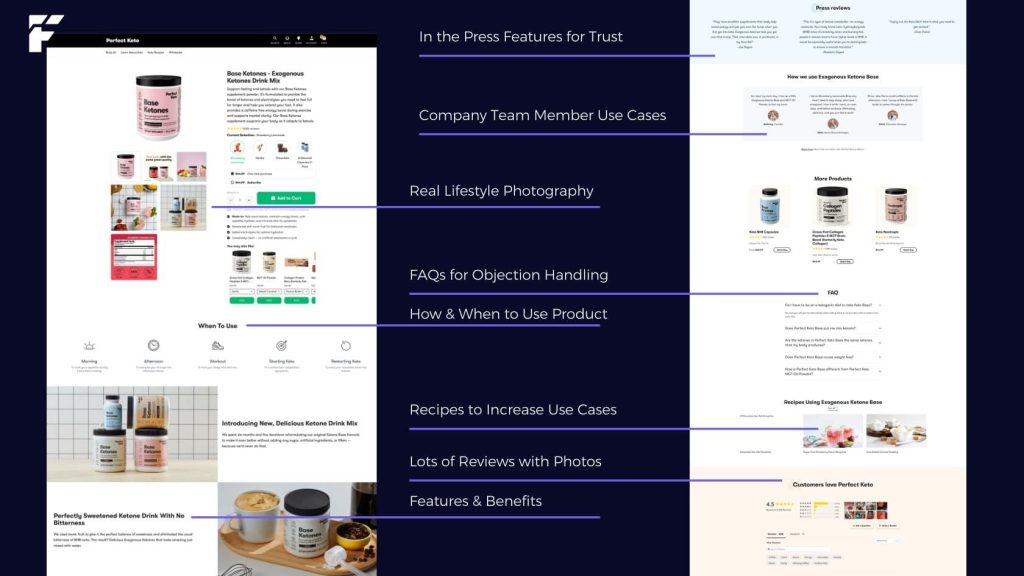
2. Messaging That Communicates Value
Product pages should persuade, not just describe.
- Start with a clear, benefit-oriented headline
- Use concise bullet points that highlight customer outcomes
- Incorporate reviews, testimonials, and FAQs to build confidence
- Present unique selling points (e.g., vegan, sustainable, made in the USA)
- Use video demos, lifestyle imagery, and comparison charts


3. A Checkout Process Designed to Convert
Minimize friction at the final step.
- Offer guest checkout (no account required)
- Display shipping rates and delivery timelines early
- Provide multiple payment options (Shop Pay, Apple Pay, PayPal)
- Use trust badges and progress indicators
Customers who reach checkout want to buy—don’t give them a reason to leave.
4. Responsive, Fast, and Mobile-First
Design for mobile users first—because they’re your majority.
- Ensure mobile experience is intuitive and fast
- Buttons and text should be readable and tap-friendly
- Avoid pop-ups that disrupt usability
- Load time should be under 3 seconds (audit with PageSpeed Insights or GTmetrix)
5. Strategic Email and SMS Capture
Don’t let first-time visitors slip away.
- Use timely, well-designed popups (exit intent, scroll, time-based)
- Offer first-time visitor incentives (e.g., 10% off, free shipping)
- Segment messaging based on behavior or product interest
- Nurture leads with lifecycle flows in Klaviyo or similar platforms
6. Post-Purchase Experience and Repeat Optimization
 6. Post-Purchase Experience and Repeat Optimization
Maximize LTV through smart follow-up.
- Display upsell/cross-sell offers on the thank-you page
- Send personalized post-purchase email flows
- Ask for reviews and user-generated content
- Offer incentives for future purchases (subscriptions, rewards, referrals)
Why 3% Should Be the Minimum Benchmark
The industry average eCommerce conversion rate ranges from 1.5%–2%. But high-performing brands consistently reach 3% or more—and in niche verticals, 5–8% is not uncommon.
If your current rate is under 2%, you’re likely experiencing:
- Higher-than-necessary customer acquisition costs (CAC)
- Lower return on ad spend (ROAS)
- Inconsistent revenue forecasting
The good news? Conversion rate is one of the most controllable levers for growth—and improving it compounds your ROI across all channels.
Final Thoughts: Conversion Is About Clarity, Confidence, and Convenience
CRO isn’t just a tactic—it’s a mindset. A conversion-focused brand sees every interaction as an opportunity to remove friction, answer a question, and move a customer forward.
At Forge, we specialize in helping eCommerce brands turn traffic into growth by refining every element of the customer journey—from landing pages and product copy to checkout UX and post-purchase engagement.